
Walkability, Privilege, and the Cities That Shape Our Bodies
Written by: Farinaz Rikhtehgaran
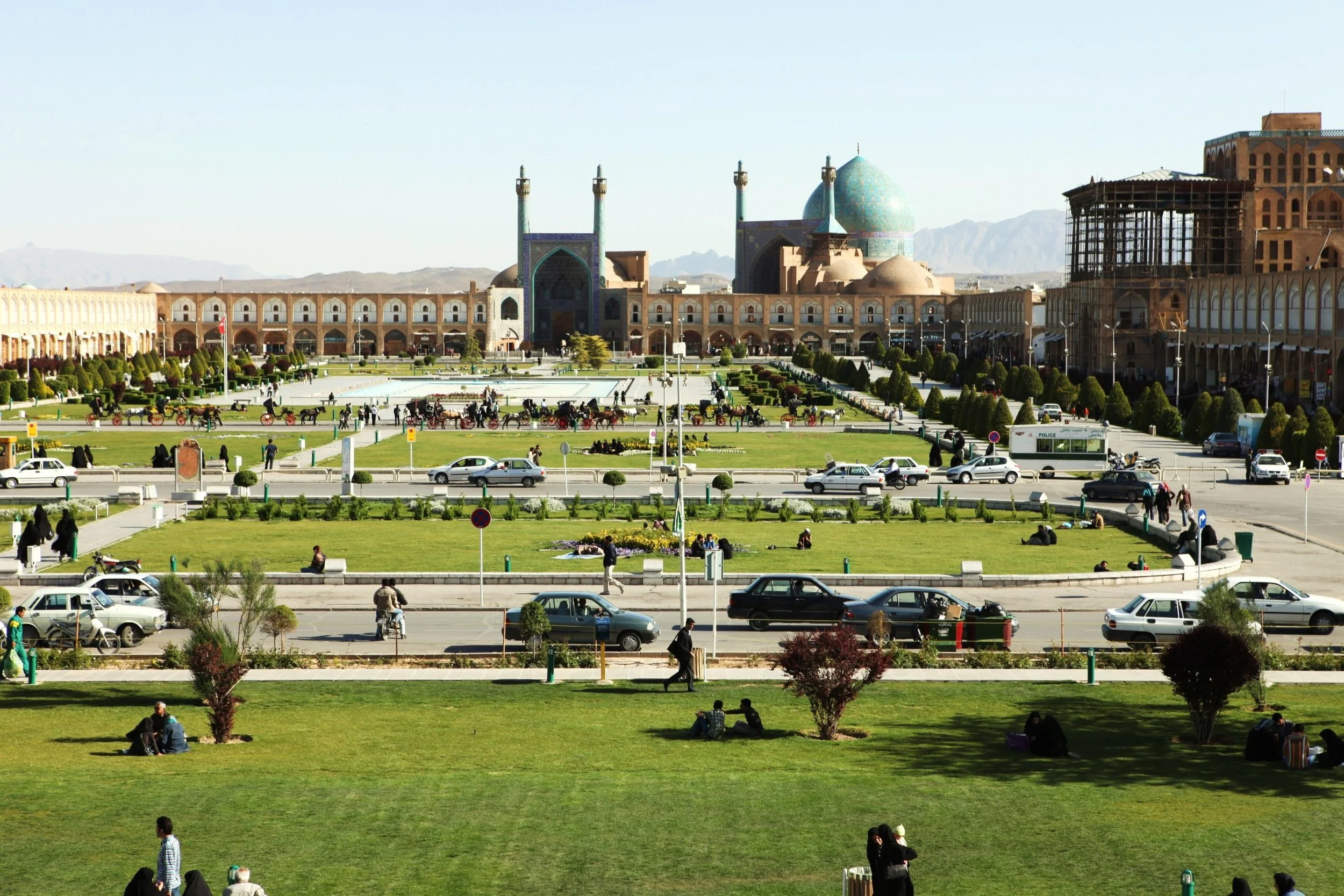
Photo by Niara via Wikimedia Commons
As an urban designer, cities have always fascinated me. I’ve been fortunate to grow up in one of the most beautiful and historic cities in the Eastern world, Isfahan, Iran, and later live for a few years in one of the most livable cities globally, Vancouver, Canada.
This piece reflects on my lived experience of these two cities through the lens of walkability and public space, and how urban form quietly, but profoundly, shapes our daily lives.
In Isfahan, as in many cities across my home country, a typical neighbourhood consists of mid-rise, medium- to high-density buildings. Homes are often enclosed by tall walls that clearly separate private yards from public streets. Streets themselves are narrow to moderately wide, multi-purpose, and animated, often lined with small shops, local services, and rows of tall deciduous trees that provide shade and visual interest. These streets naturally invite walking, observing, and lingering. Movement feels human-scaled and engaging. This video from Isfahan offers a glimpse into that everyday experience: the rhythm of the streets, the social life unfolding in public space, and the types of environments that shape how people move, interact, and connect with their city.
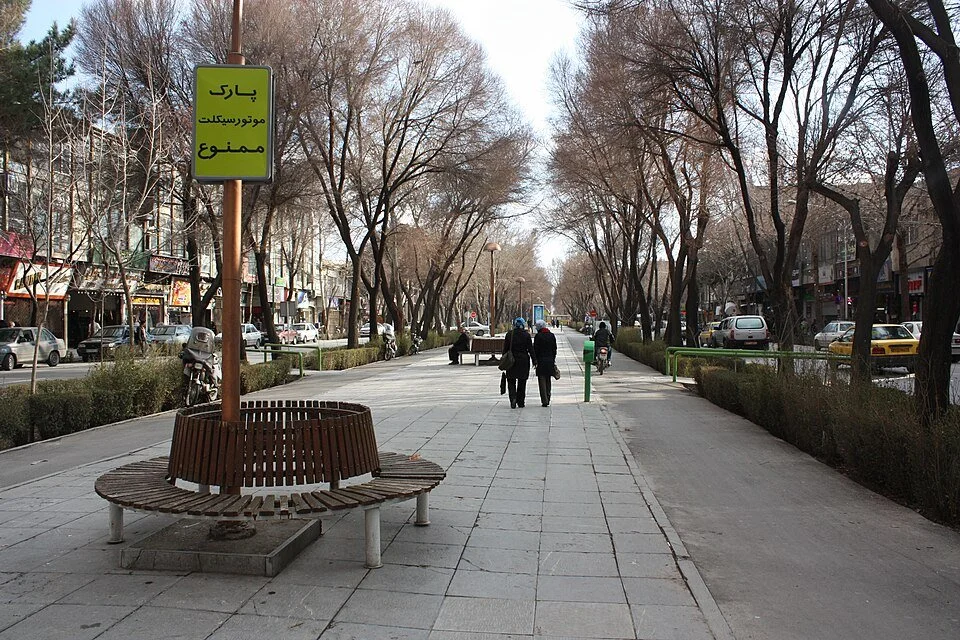
Photo via Wikimedia Commons
My first experience of Vancouver, however, was strikingly different. Looking out the window of the airport taxi, I waited eagerly for the city to “appear.” Instead, I saw what felt like endless woodlands, dense greenery punctuated by occasional clusters of tall buildings. Only later, when I checked the map, did I realize we were already in the middle of the city.
As I explored further, I noticed that downtown Vancouver and some adjacent neighbourhoods carried a familiar urban energy, dense, active, and walkable. But beyond these areas, much of the city and the surrounding region followed a typical suburban pattern: single-family detached homes, wide streets, and residential neighbourhoods organized around large centralized spaces. Schools, community centres, and amenities were grouped together, but their main front-facing spaces were often dominated by parking lots rather than lively public realms. The result was an environment that felt functional, yet visually and socially disengaging for people walking.
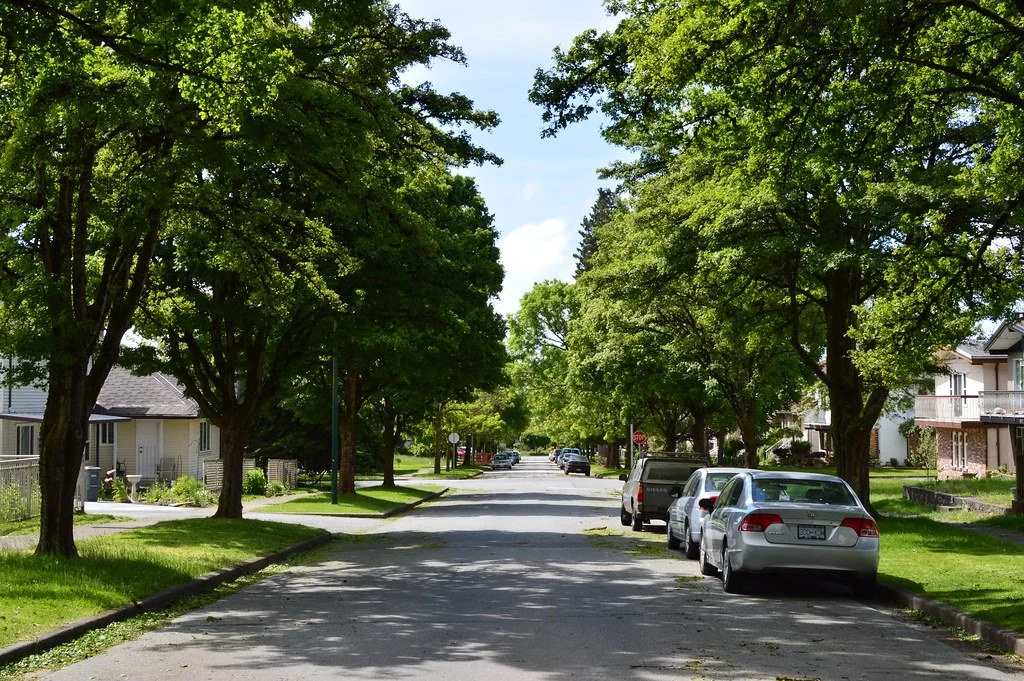
Photo by UBC Media Relations
Over time, my body experienced the impact of this urban form. In Isfahan, walking was an effortless part of everyday life. Within a 10–20 minute walk, I could reach local shops, vibrant streets, and green spaces. Walking wasn’t exercise; it was simply how the city worked.
In Vancouver, my daily routine looks very different. I walk about 15 minutes just to reach a bus stop, often about 15 minutes for the bus, followed by a 40-minute ride downtown to experience a similar level of urban vibrancy and walkability.
This contrast has led me to think of walkability as a privilege. One that, in many North American cities, is often accessible only to those who can afford to live in central neighbourhoods. Experiencing both extremes has shaped my motivation as an urban designer: to contribute to creating more walkable, inclusive, and pedestrian-friendly communities beyond downtown cores. Having experienced the comfort and benefits of walkability firsthand, I would like to see this become more widely accessible across Metro Vancouver municipalities as well.
True walkability goes far beyond widening sidewalks or adding accessibility features, areas where many cities, including Vancouver, already perform relatively well. Walkability is about proximity, density, land use, and street life and vibe. It requires thoughtful urban planning, zoning bylaws that allow mixed uses, human-scaled street layouts, and transportation systems that prioritize people over cars. Historically, many cities in the Eastern world were shaped around walking and social interaction; in contrast, much of North America’s urban fabric has evolved around car dependency.
Achieving truly walkable communities therefore requires a systemic approach. It involves coordinated efforts from local governments, planning departments, and institutions that shape mobility and public space, such as transportation authorities and insurance bodies like ICBC. It also requires addressing the deeply embedded culture of car-centricity that influences how we design, fund, and value our streets.
So the question remains:
Is Vancouver, and the wider region called Metro Vancouver, moving toward becoming a truly walkable place for everyone, not just those living downtown?
And if so, how quickly are we willing to challenge the systems and assumptions that have shaped our cities for decades?