
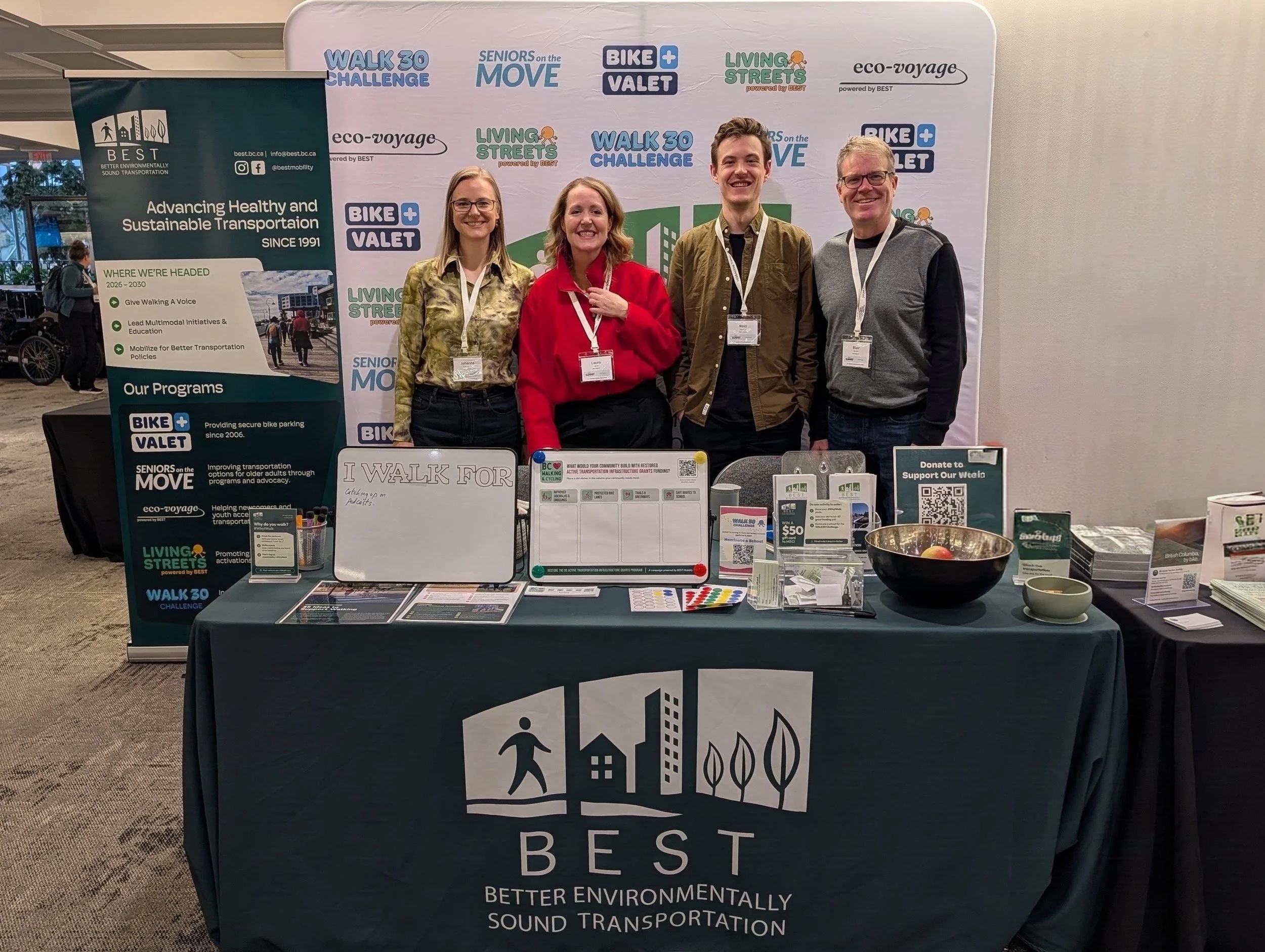
There’s a particular kind of energy that fills a room when nearly 300 people who care about similar things come together. After an intense month of closely watching the changes unfolding in local governments around BC and at the provincial level, being around that energy and passion was just what the doctor ordered. The planners, advocates, engineers, researchers, community organizers, and volunteers who make up the Active Transportation community are exactly the kind of movers and shakers who are ready to keep things moving forward, and spending three days sharing ideas and learning from each other was super invigorating.
We came home with a renewed sense of why investment in active transportation matters, and we’re ready to get to work advocating for all the positive outcomes AT can achieve, like safer streets, healthier communities, stronger social connections, and better places to live, work, and do business.
About the Summit
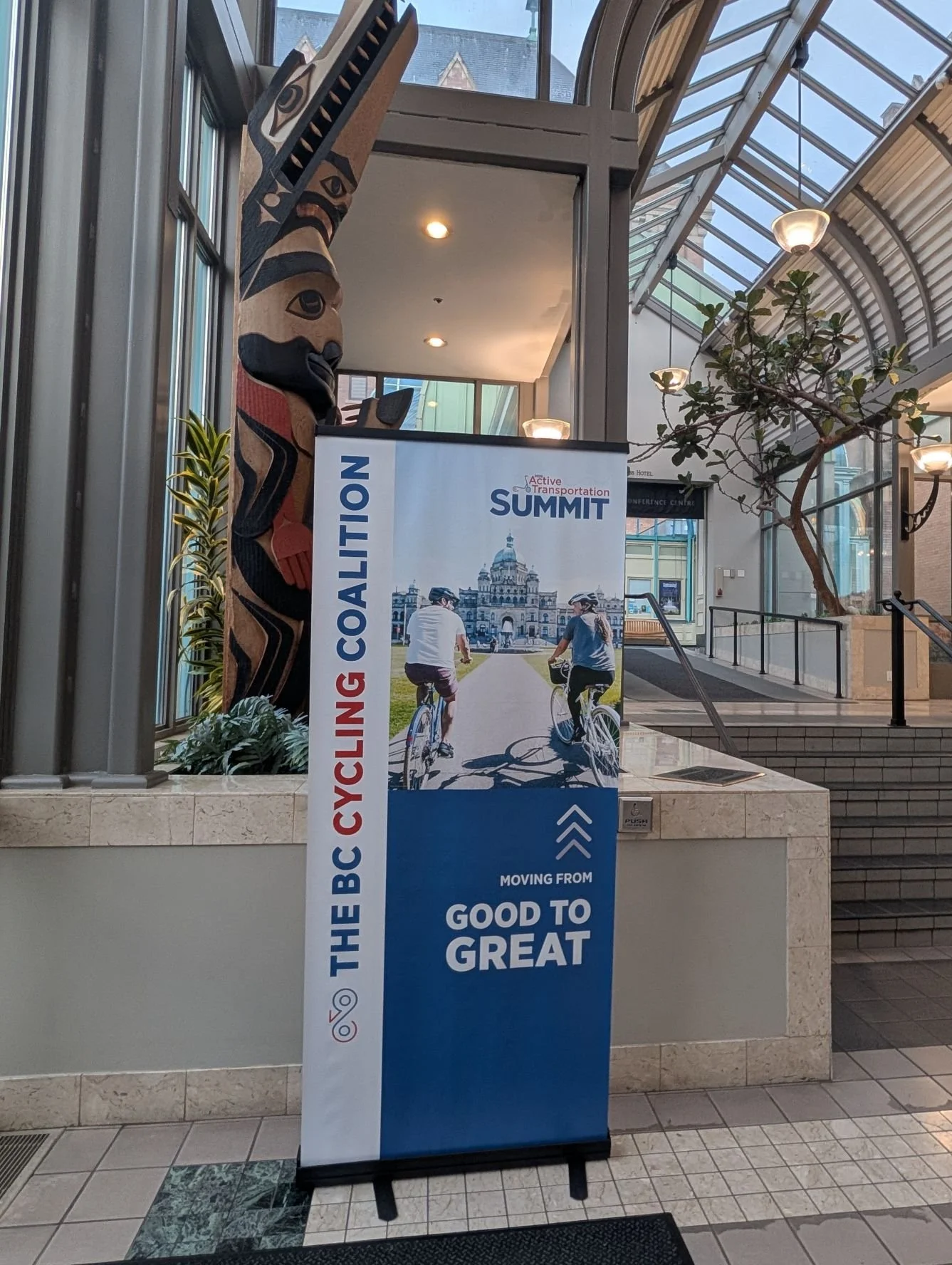
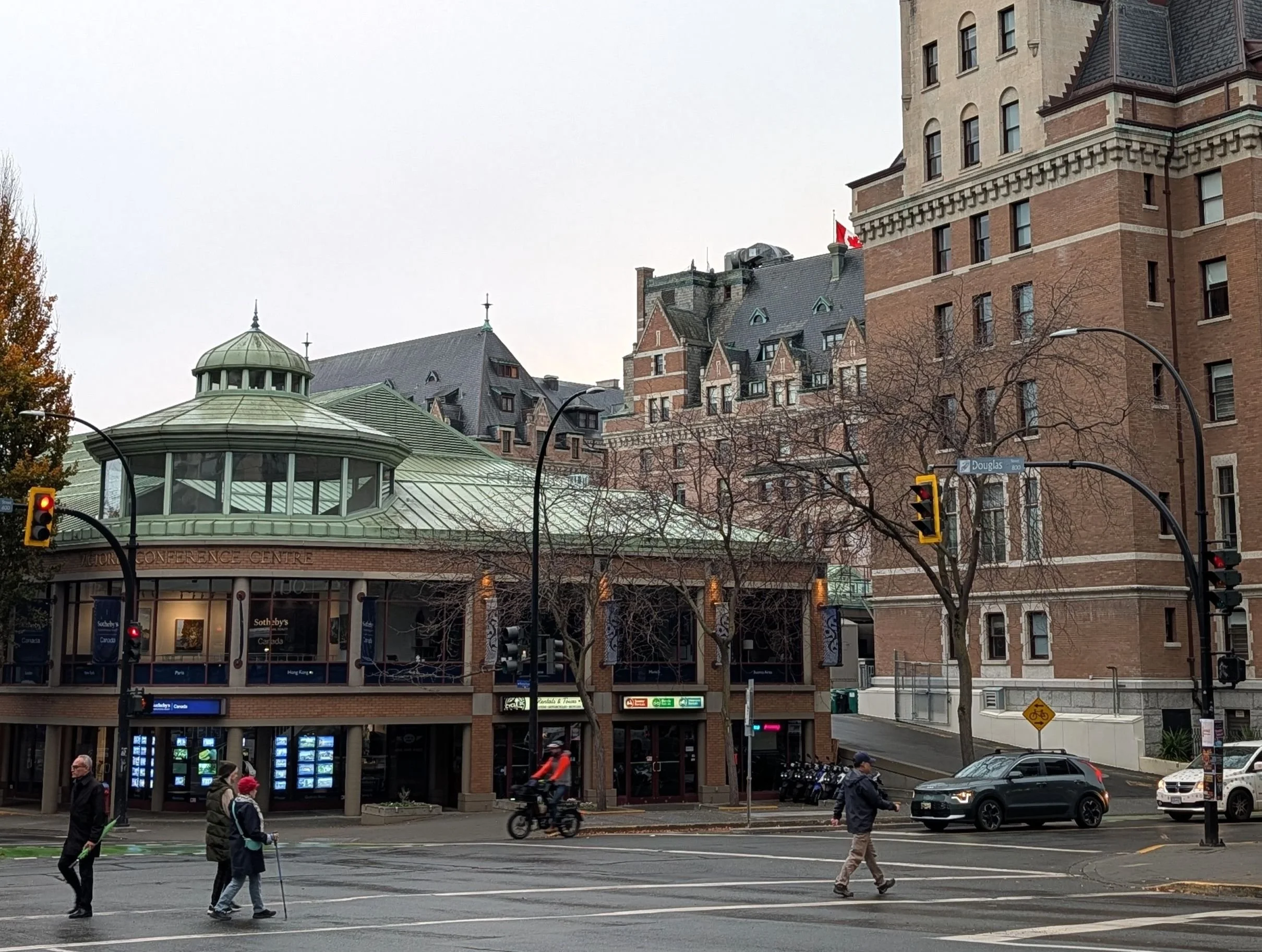
From October 28 to 30, 2026, the Victoria Conference Centre hosted the fourth BC Active Transportation Summit. The BC Cycling Coalition organized the event, with Capital Bike as the local host partner.
Over three days, close to 300 delegates took part in workshops, presentations, and panels that were grouped across three themes: Community & Society, Policy & Strategy, and Design, Systems & Network Effects. We really appreciated hearing from communities across the Province about what’s working in walking, cycling, and shared mobility, and learning about the leadership and strategies needed to advance Active Transportation across BC.
For BEST, it was a chance to bring our perspectives as advocates to the table, share what we’re learning through our programs, and connect with people who are tackling similar challenges and opportunities in their own communities. We had so many great conversations at our Trade Show booth and at the different networking events.
We were especially proud to have team members leading two panels. Laura Jane brought together a great panel on “Why Every Neighbourhood Needs Pedestrian Streets” and Farinaz Rikhtehgaran led a super important session on “Aging and Active Transportation”. Here’s a recap on the two BEST-led sessions.
Why Every Neighbourhood Needs Pedestrian Streets
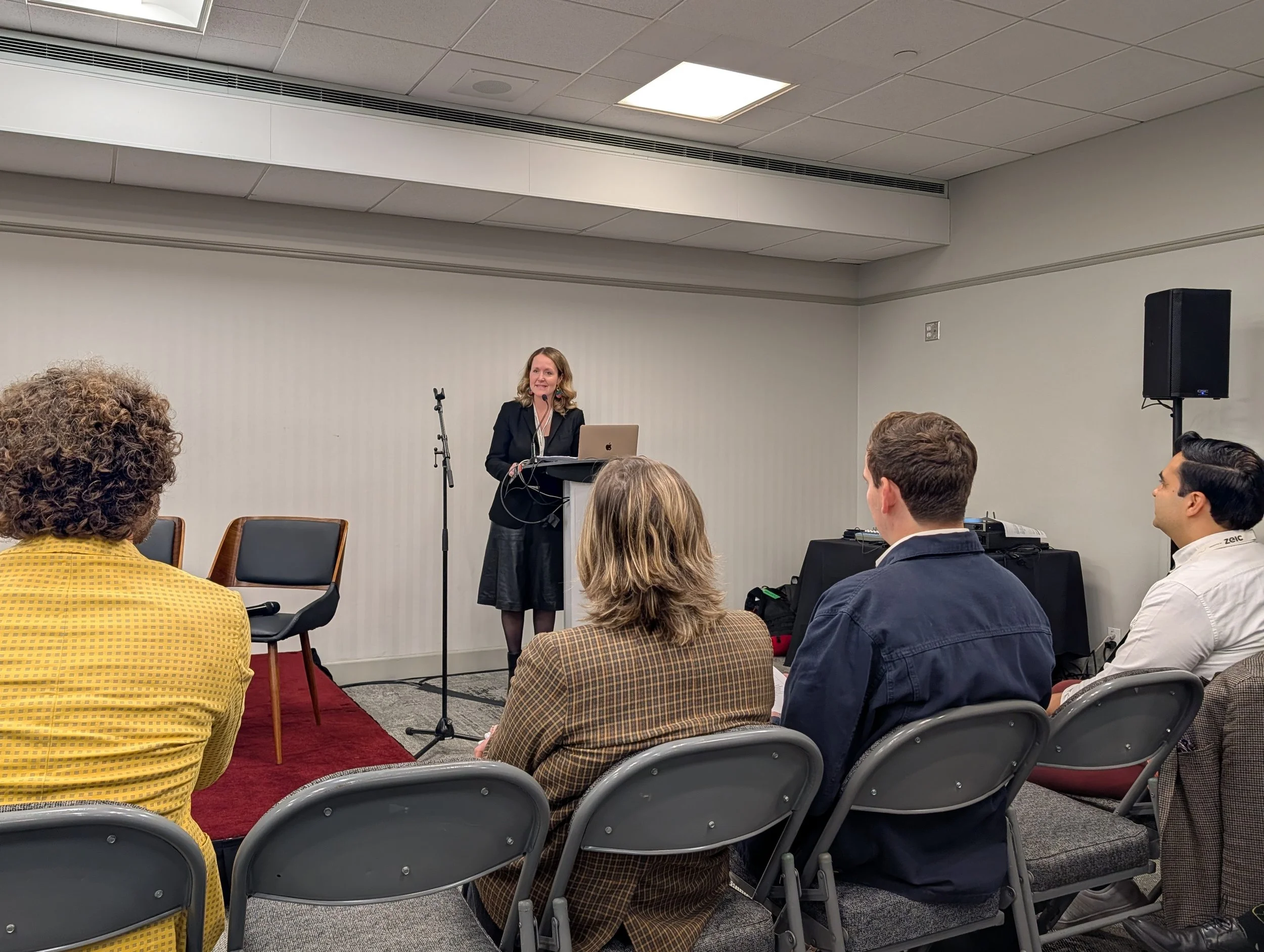
When a street is opened up to people instead of cars, the benefits go well beyond safety and health. Car-free spaces build community, give local businesses a boost, and create joyful, human-scaled places where neighbours of every age can slow down, linger, and connect.
BEST's Executive Director, Laura Jane, brought together a lineup of people who have tested these ideas on the ground in communities across B.C.:
Kelly Clifton, UBC School of Community and Regional Planning (SCARP)
Ross Kenny, City of Victoria
Sam Khany, City of Vancouver
Hugo Johnston, Granville Island
The session was short but packed. Panelists shared what they've learned about design, programming and activations, and building public and political support. The big question running through the conversation: how does a community move from a temporary pilot to a permanent pedestrian space?
One piece of advice that stood out was “start with direction, not perfection”: find the next simple thing, do it, and build from there. Panelists also encouraged watching for opportunities that can open the door to change, like major capital projects or big moments like hosting the FIFA World Cup. Another key theme was to test ideas and listen to feedback, and learn and adapt along the way.
Aging and Active Transportation
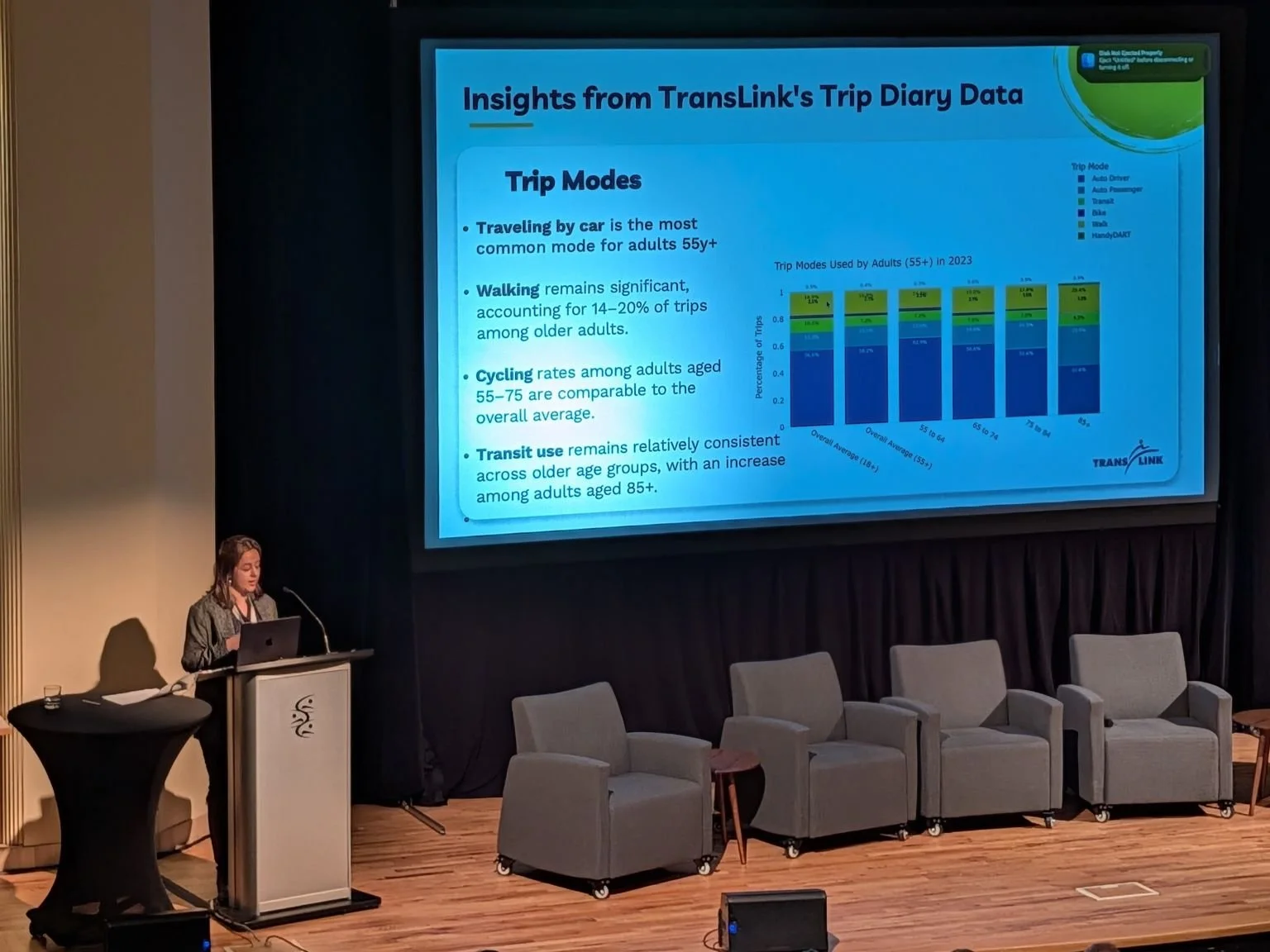
How we move shapes how we live, and that only becomes more true as we age. Being able to walk to the pharmacy, roll to a friend's place, or take a bike ride along the water isn't just about getting from A to B. It supports physical health, mental well-being, social connection, recreation, and, perhaps most of all, independence.
BEST's Director of Programs, Farinaz Rikhtehgaran, moderated a panel of leaders who work with older adults across B.C. through research, on-the-ground programs, and provincial advocacy:
Jake Winn, Vancouver Cycling Without Age Society
Alison Chamberlain, District of Saanich
Lisa Corriveau, HUB Cycling
Douglas Jones, Canadian Association of Retired Persons (CARP) and a member of BEST's Seniors Transportation Advocacy Committee
The conversation explored emerging trends in how older adults are using active transportation, and shared real-world examples of programs that are making a measurable difference in people's lives.
This session matters a lot to us. Older adults are too often left out of conversations about active transportation, even though they have so much to gain from streets that are safe and comfortable to walk and roll on. Seeing a full session dedicated to seniors' mobility at the AT Summit was a meaningful step, and we're excited to keep building on that momentum and bringing older adults' experiences to the forefront.
Four Themes We’re Taking Home
1. Relationships before projects
Engagement and reconciliation with First Nations isn’t one-size-fits-all, and the process matters just as much, if not more, than the end destination.
Coral Mackay and Ashley Wright of K'ómoks First Nation shared an invaluable framework for Indigenous engagement and reconciliation, built on three foundational dimensions:
Governance and policy: Organization bylaws, strategic plans, formally embed equity, inclusion, and Indigenous representation into how you operate.
Culture: creating an environment of self-reflection, cultural safety, and continuous learning that focuses on meaningful action rather than performative gestures.
Relational: prioritizing long-term, genuine relationships that respect community and or leadership capacity, local protocols, and timelines.
The framework outlines screening categories and a project assessment matrix that helps teams genuinely reflect on whether a proposed project that requires partnering with First Nations is ready to proceed, needs to be paused and be refined, or, in some cases, should not move forward at all if the internal readiness is not quite there yet. Doing your homework first before reaching out to Nations, showing up and being curious around Nation-identified priorities, and not rushing the relationship building process to fit a project timeline were some other key takeaways for groups looking to evolve their organizational practices and decolonize their advocacy.
2. Keep building the business case
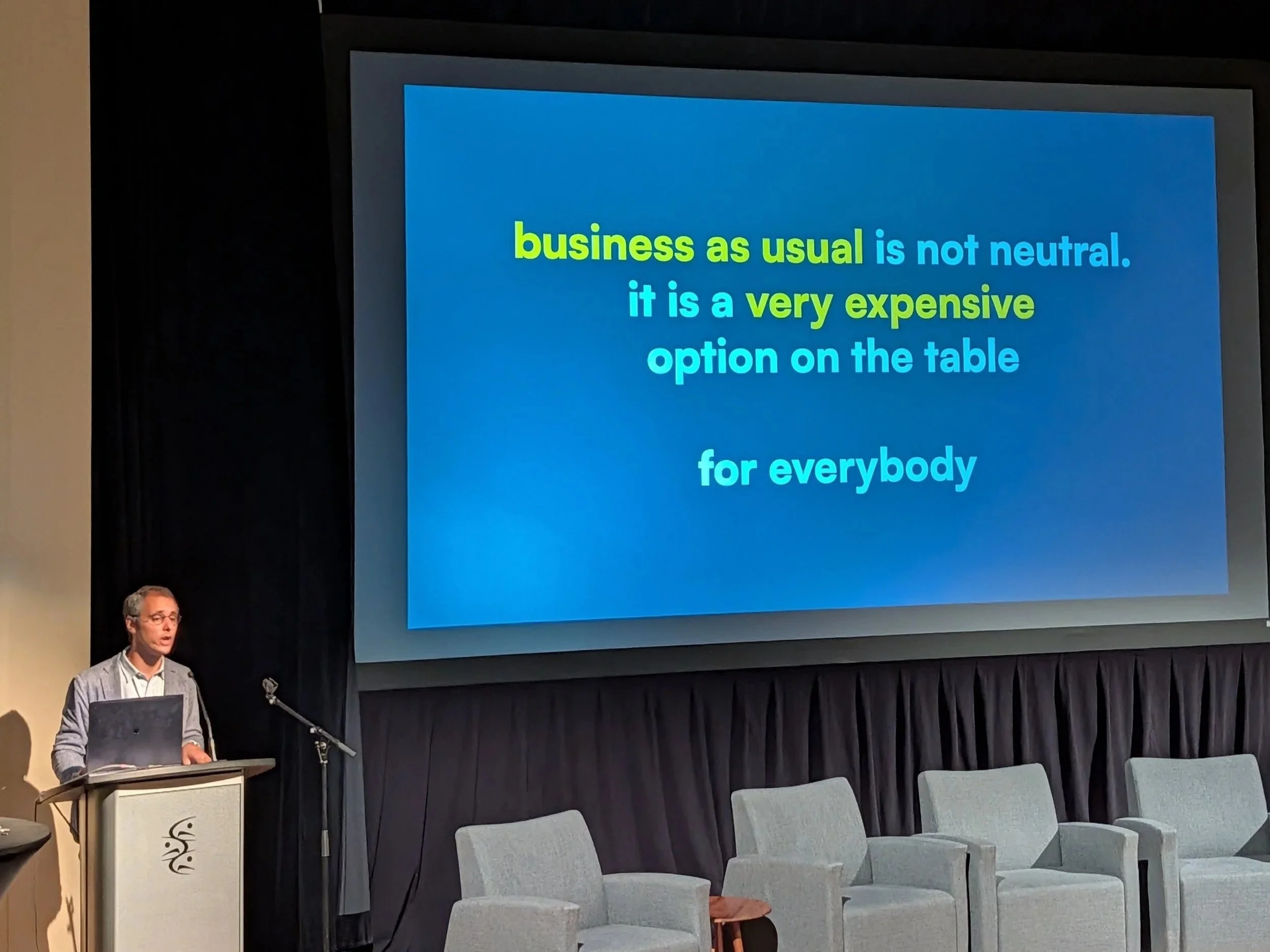
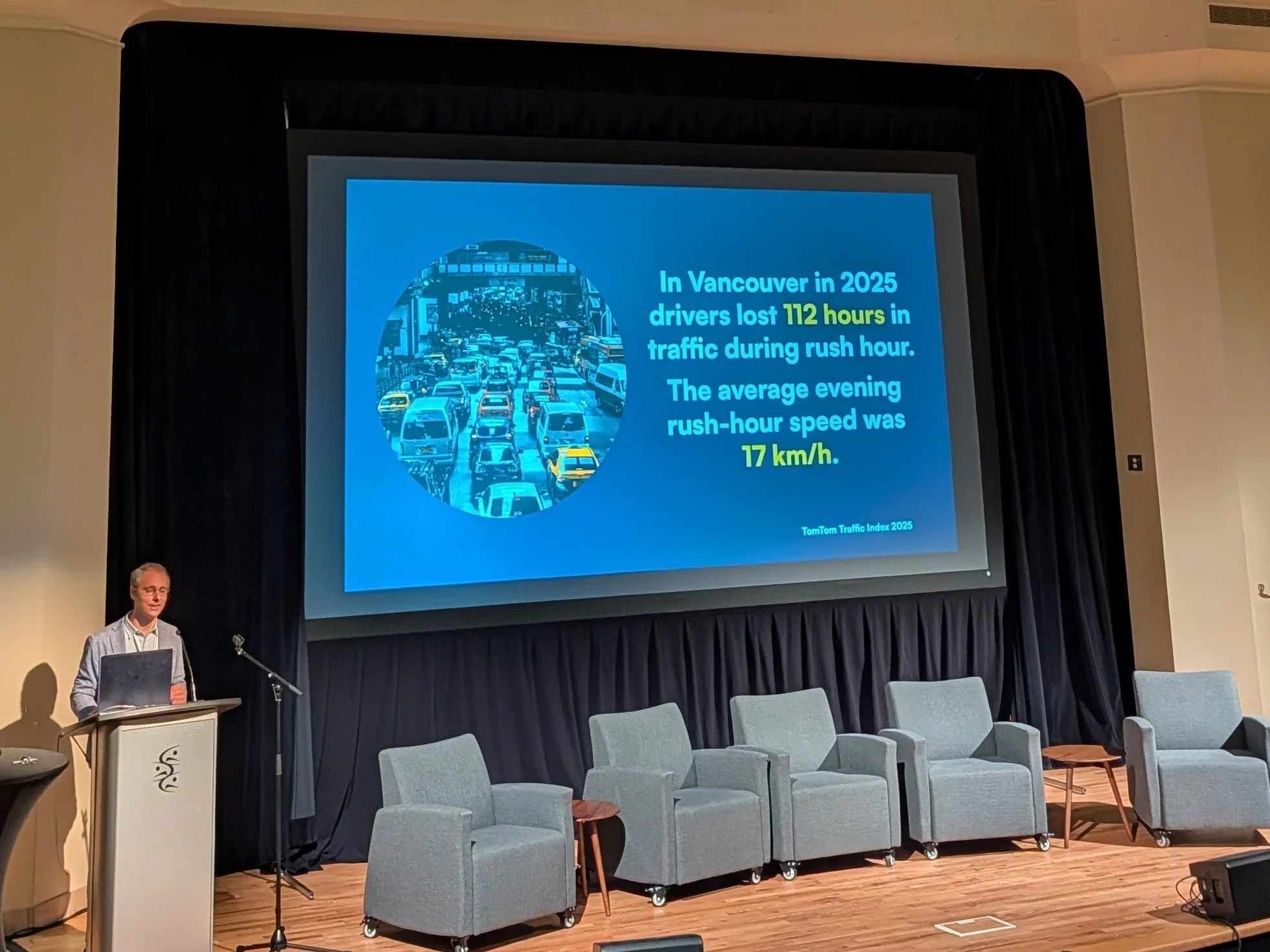
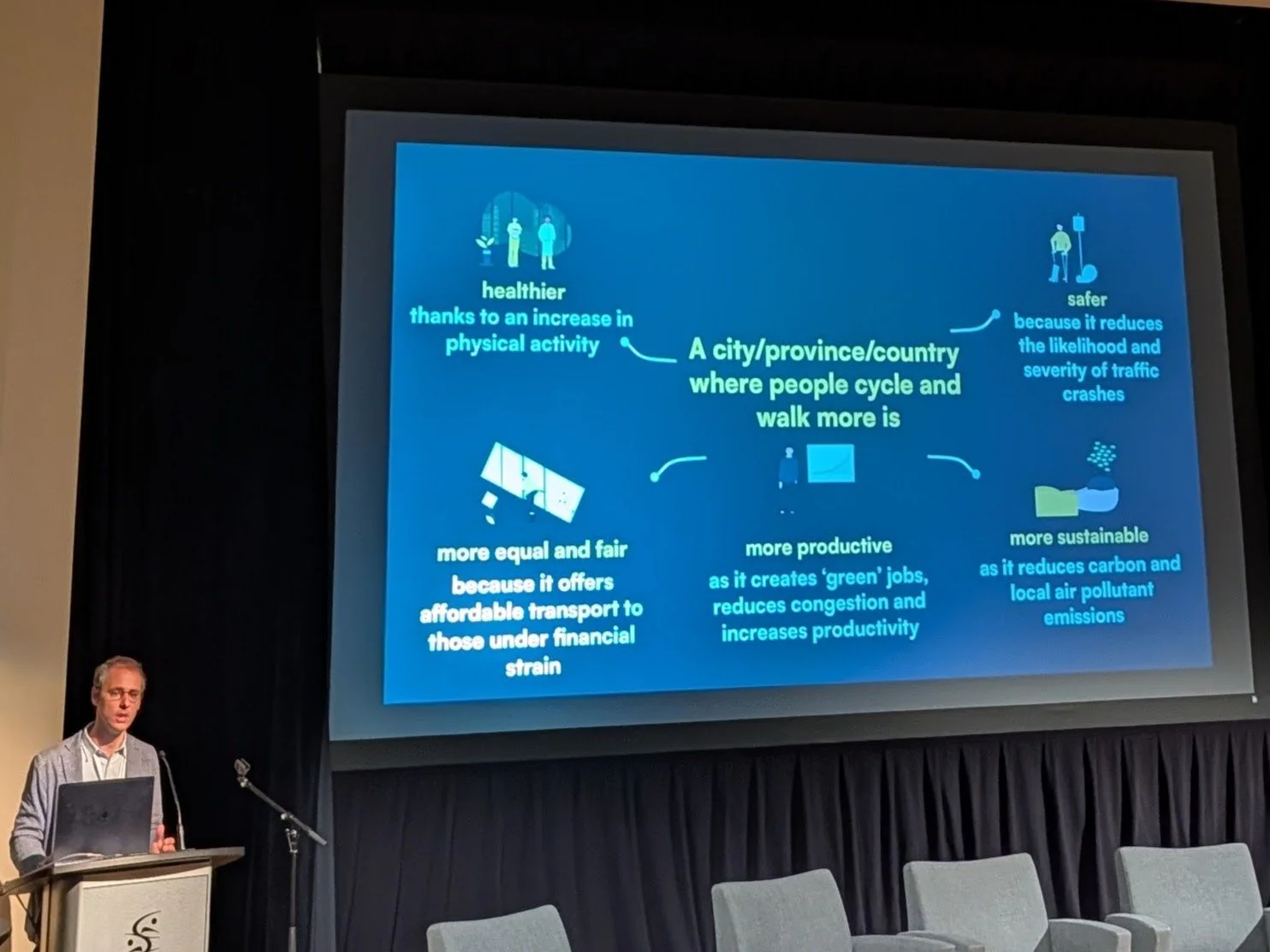
We heard again and again that active transportation makes a strong economic case for investment. It delivers measurable returns in road safety, improves affordability, builds healthy communities and supports economic growth. People who walk and bike support local shops and businesses, and less road congestion leads to more productive economies.
The next step is backing that case with the right data and compelling stories. Matteo Jarre gave the room a true masterclass in economic storytelling, showing us just how significant not investing in active mobility really is.
3. Measure the mindset shift
Kelly Clifton offered a great reminder: when we evaluate a project like a pilot pedestrian street, we shouldn't only count people and dollars. We should also ask how values and mindsets have shifted.
When it comes to going from experimentation to permanence, evidence that a project changed how people feel about their neighbourhood or their street is powerful. Changes to broader philosophy about mobility and the public realm can have ripple effects. Survey tools, short interviews with people using the space, or a comment board on site can capture those changes.
4. One segment at a time is still progress
Thanks to Adam Olsen for reminding us that taking a phased approach isn't giving up on the vision.
We heard about so many inspiring examples, including the Pender Island multi-use trail and the Galloping Goose Regional Trail, that show what's possible when dedicated mobilizers, a few key champions in government, and a community willing to organize come together.
One practical approach is matching up asset management and planned improvement projects with community needs, so that routine work like utility upgrades can deliver a piece of the bigger vision, even if it’s just a short segment. In smaller and rural communities, one great trail can go a long way, drawing visitors who stay, shop, and eat locally.
What We Heard At the BEST Booth
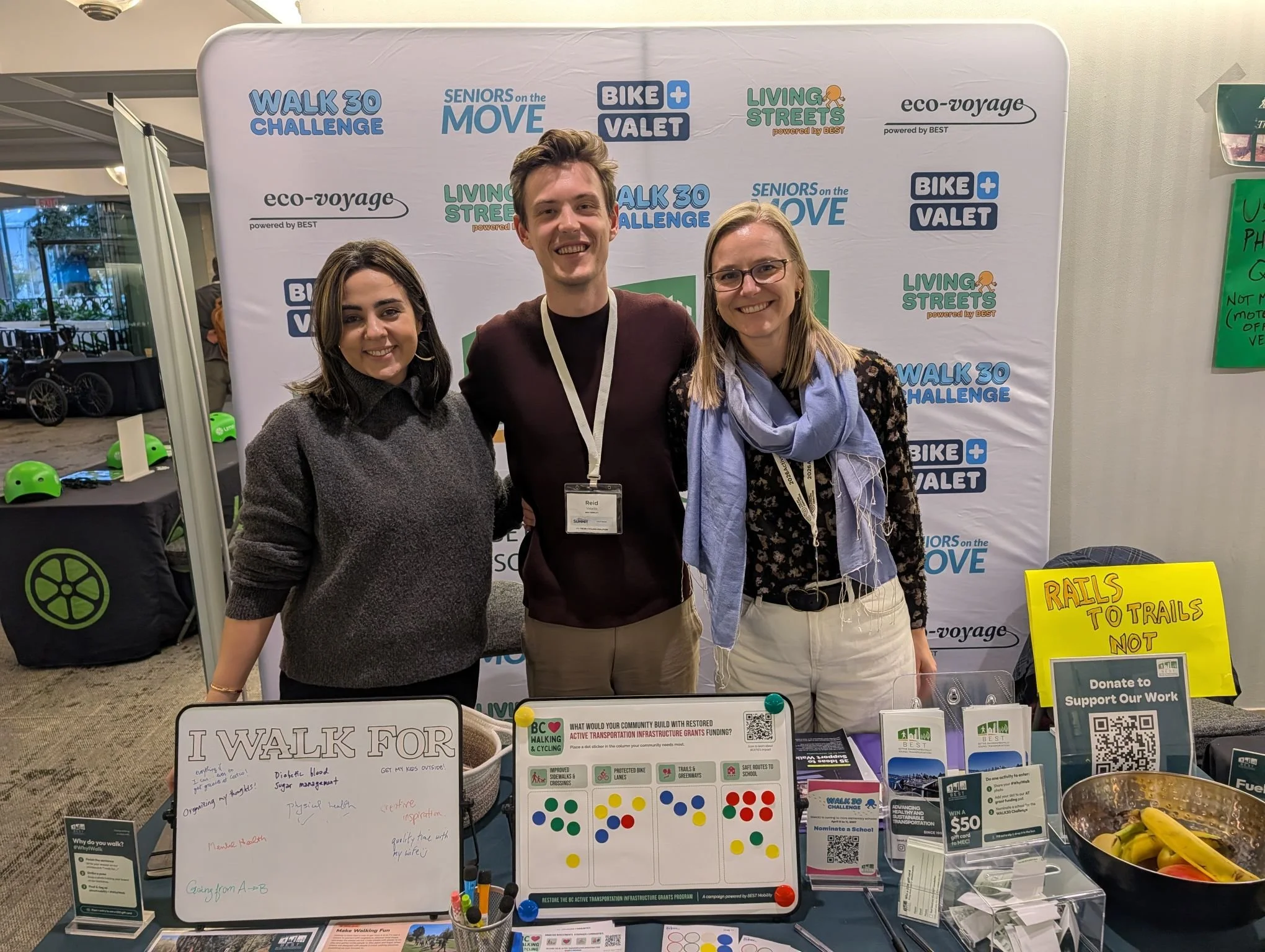
Some of our favourite conversations happened at our booth, where we invited delegates to share their own perspectives in three ways:
Why I Walk. We asked people to tell us why they walk or roll, and our whiteboard filled up fast.
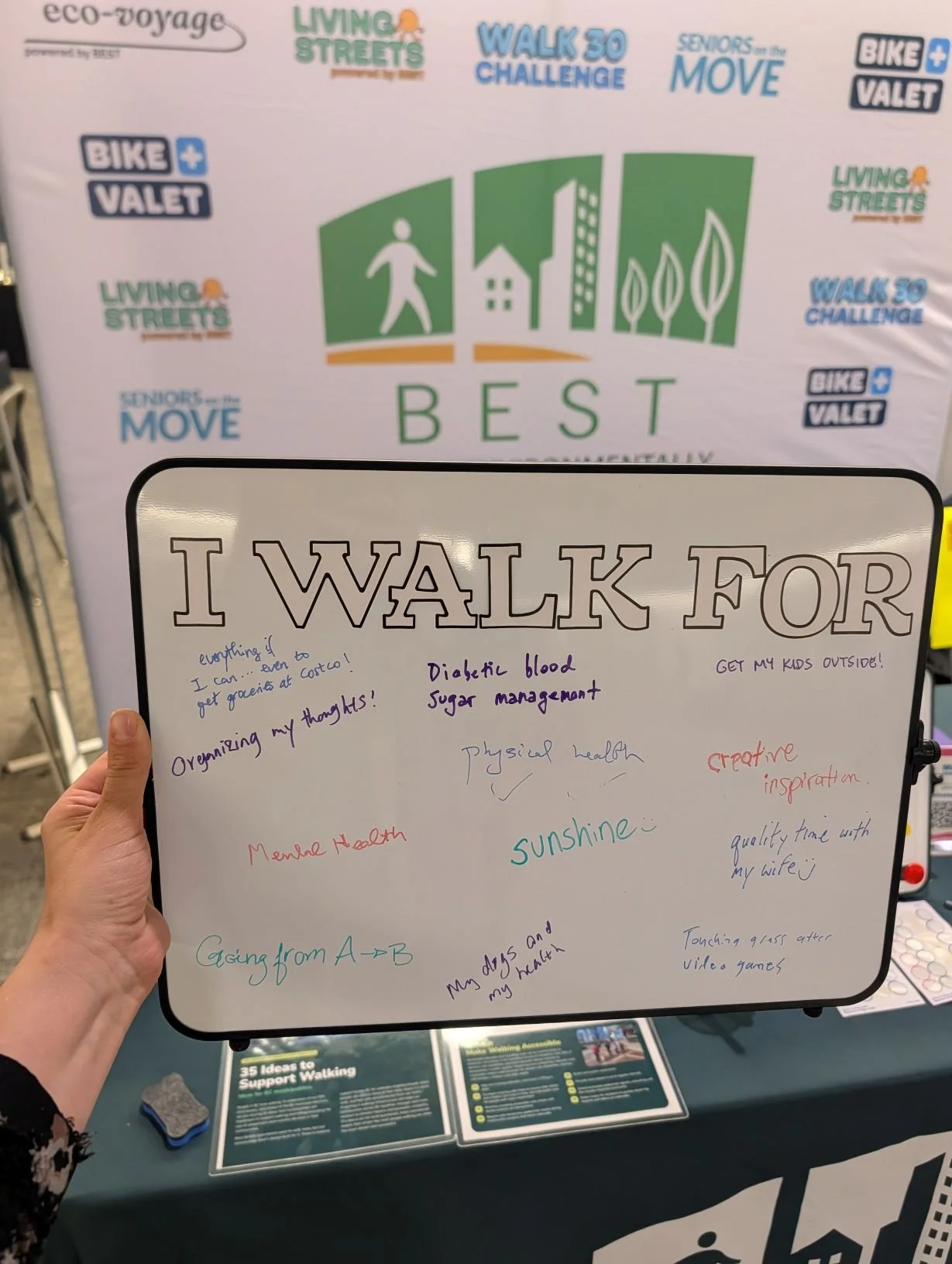
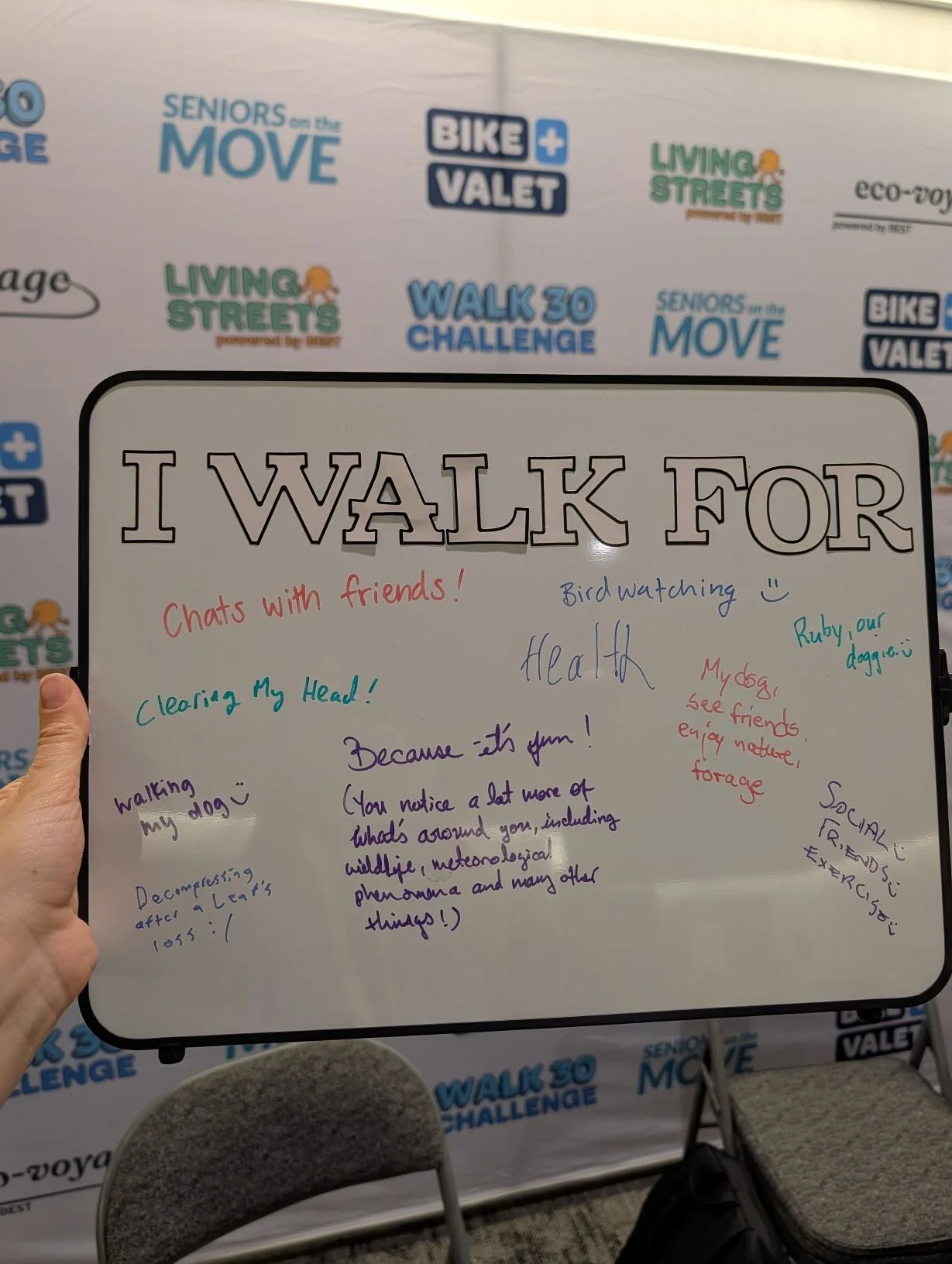
WALK30 school nominations. Delegates nominated elementary schools for WALK30, BEST's fun annual challenge to inspire daily walking, which we are expanding to more elementary schools in 2027.
Where would you invest? We asked people what they would like to see their communities invest in if BC Active Transportation Grants funding was restored. It was similarly split between safe routes to school and protected bike lanes (20 votes each), followed by trails and greenways (17 votes) and improved sidewalks and crossings (16 votes).
Thanks to everyone who stopped by our booth to take part and to chat!
What’s Next
We left Victoria renewed in our conviction that the case for active transportation is stronger than ever, and we’ll be stronger when we work together as a sector. In the months ahead, we’ll be putting these lessons to work, especially telling compelling stories with better data, honing in on the AT business case, leading advocacy work at the Provincial level, and continuing to make sure senior’s voices are a leading part of the conversation.
A huge thank you to the organizers, especially the teams at BC Cycling Coalition and Capital Bike, to all the panelists and speakers, and to everyone who stopped to chat with us. We’re leaving with new ideas, new connections, and a lot of motivation.
Want to stay involved? Sign up for our newsletter to stay up to date on our ongoing advocacy work.