BC Loves Walking and Cycling
Smarter Investments. Stronger Communities.

People across B.C. want better ways to walk, roll, and cycle. Communities are ready to build the infrastructure that makes those journeys safer and easier.
Let’s make sure they have the provincial support to keep building.
BC loves walking and cycling. Let’s invest in it.
Across BC, people are asking for safer streets, better sidewalks, protected bike routes, accessible crossings, and stronger connections between the places they live, work, and visit.
For more than 30 years, provincial active transportation grant programs have helped municipalities and Indigenous communities across the province deliver these projects. In 2025 the BC Active Transportation Infrastructure Grants Program (BCATIG) was put on pause.
Looking back on three decades of funding, the evidence is clear: BCATIG has helped expand access to active transportation, improve safety, and create healthier, more connected communities throughout B.C.
Today, B.C. needs BCATIG back.
We’re calling on the Province to restore the BC Active Transportation Infrastructure Grants Program.
Why Provincial Investment Matters

Unsafe streets cost the lives of 300+ British Columbians each year, while crashes cost the Province an estimated $500 million+ annually. Investing in walking and cycling infrastructure saves lives, and reduces costs to government.
Safer Streets

Affordable Transportation
Safe options to walk, cycle, and roll, give people more choices for trips, reducing household transportation costs and keeping more disposable income in local communities.

Healthier Communities
Streets that make it easy and comfortable to walk and cycle support physical activity as part of everyday life, reducing chronic disease rates and improving well-being.

Stronger, More Resilient Communities
Better transportation options help communities respond to changing costs, climate impacts, and the needs of people of all ages.
30+ Years of Impact. 130 Municipalities. 40+ First Nations.
For more than 30 years, B.C.'s provincial cycling and active transportation grant programs have supported hundreds of communities across the province. This investment began in 1995 with the launch of the Cycling Network Program, which provided cost-shared funding to communities to build cycling routes and infrastructure. The program evolved through initiatives like BikeBC, before expanding to support walking, cycling, and other forms of active transportation through the BC Active Transportation Infrastructure Grants Program.
Hundreds of projects have been funded through this program lineage, including more than 600 projects listed from 2004 to 2026. The current funding record includes projects involving 130 municipalities and 42 First Nations and Indigenous governments. Since 2017, the Grant Program has awarded nearly $130 million to communities across B.C.
For municipalities, provincial cost-sharing funding can make the difference between a project moving forward or sitting on a shelf.
“The B.C. Active Transportation Infrastructure Grant is the biggest contribution that the provincial government can make to achieve their own transportation plans and one of the few tools they have to help reduce emissions.”
— Patrick Johnstone, Mayor of New Westminster“Increased and predictable BCAT funding gives municipalities greater ability to advance projects, leverage local investment and build out connected networks rather than having to deliver improvements incrementally over much longer periods.”
— Tony Valente, City of North Vancouver Councillor “BCAT funding had a huge impact on the Kingsway Avenue project in Port Coquitlam, representing approximately 25% of the total project budget. For small municipalities like Port Coquitlam, this type of funding can often represent the difference between proceeding or not proceeding on a project.”
— David Walker, Manager of Transportation, City of Port CoquitlamSee what Provincial Investment Can Build
From trails and crossings to connected cycling routes, explore these case studies where BCATIG funding is helping communities across B.C. make active transportation a reality.
Guildford Way Transportation Road Improvements - Coquitlam
Credit: Nic Laporte Youtube Video
Credit: ISL Engineering
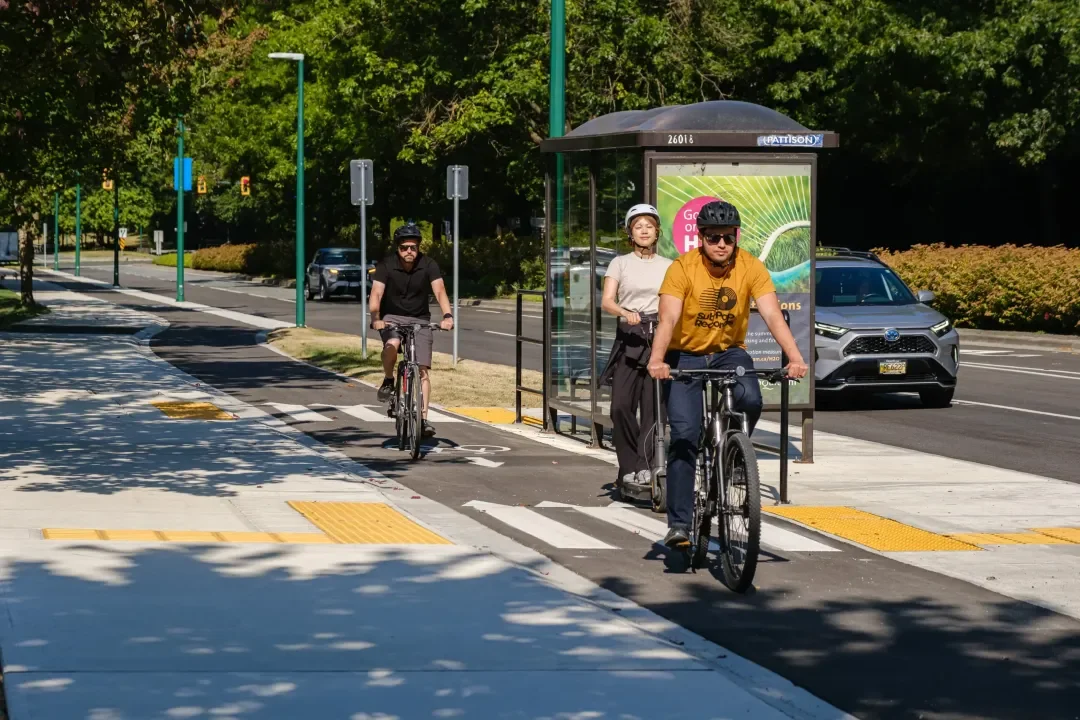
The new protected intersection at Guildford and Pinetree has reduced high-risk conflicts by 99.3%, and provided a new connection for 24,000 residents to schools, parks, employment, and the Lafarge Lake-Douglas Skytrain Station.
Funding Year: 2022/2023
Project Type: Protected Bike Lanes and Intersections
The Guildford Way Transportation Road Improvements included 2.2km of protected bike lanes, as well as protected intersections and upgraded bus stops. A highlight of this project is the new fully protected intersection at Guildford and Pinetree, which has reduced high risk interactions by 99.3%. The full project received the Project of the Year Award from the Institute of Transportation Engineers Vancouver Chapter.
Capital Regional District Regional Trails Widening and Lighting Project - Victoria, Saanich

“What is most exciting about this project is the opportunity to improve a key piece of the region’s active transportation network for decades to come. The widened and separated trail will better support the increasing number of people who rely on the regional trails for transportation and recreation. ”
Capital Regional District Trails are a vital part of active transportation infrastructure in the region and are incredibly popular with cycling commuters, recreation users, and as walking paths. In 2025, the traffic counter at the Selkirk Trestle counted 1.33 Million users, with a daily average of 3,639.
Funding Year: 2023/2024
Project Type: Renewal, Trails Widening, and Lighting Project
Project Completion: Estimated 2028
To handle current and future levels of use, the Capital Regional District is widening sections of its two most popular trails to increase capacity and safety for all users. This will create separated use pathways for pedestrians and cyclists, and will add lighting to sections currently without lights. Additionally, the project will fix and upgrade multiple trestle bridges along these sections.
Kingsway Ave Multi-Use Path - Port Coquitlam
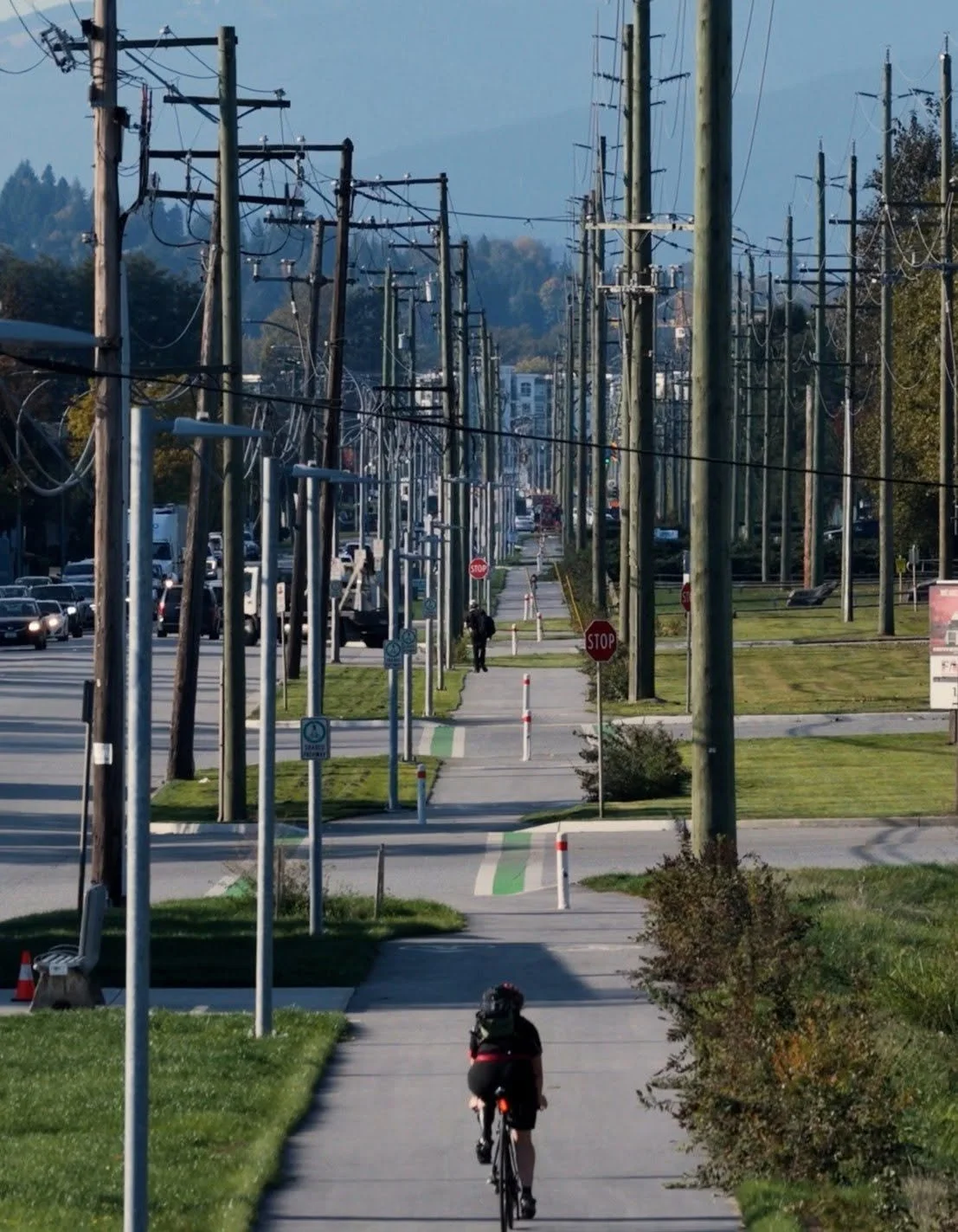
“Other than the Traboulay PoCo Trail, the Kingsway MUP represents the largest and longest active transportation facility in the city. While the PoCo Trail is an absolute gem of our city, I think it is also great that we now have another route that provides a more direct link between the river, downtown, and beyond. When combining it with the Kelly Avenue Greenway, you can now practically traverse the entire city east-west safely on your bike.”
Credit: City of Port Coquitlam Facebook
In recognition of the improved connection, Port Coquitlam won an award from the HUB Bike Awards 2026 in the Infrastructure Improvement Category.
Funding Years: 2022-2024
Project Type: Multi-Use Path
The new Kingsway Avenue Multi-Use Path is the first continuous east-west bike route south of the railyards, linking downtown Port Coquitlam, residential, commercial, and industrial areas to the Mary Hill Bypass and Fraser River trail system. The new path allows users to connect from the Pitt River Bridge to downtown Port Coquitlam on an intuitive and safe route. Upgrades also included improved intersections, sidewalks, street trees, and new bus stops.
Chilliwack River Road - Tzeachten Nation, Chilliwack
Credit: Google Streetview
Tzeachten Nation initiated planning starting in 2016. The road connects with other multi-use pathways, creating a much needed active travel network in and around the Nation.
Funding Year: 2021/2022 and 2024/2025
Project Type: Multi-Use Path
Chilliwack River Road had no pedestrian infrastructure, requiring pedestrians to walk on the shoulder, which created conflicts with cyclists. This project added a multi-use path, along with additional connecting roads, resulting in pedestrian and cycling connectivity to Tzeachten Nation. This project serves approximately 2,500 people (in both communities), with over 1,500 of these residents being over the age of 65 years.

Let’s bring BCATIG Back
We recommend that the Province restore the BC Active Transportation Infrastructure Grants Program and increase annual funding to $18 per resident ($100 million) in order to meet demand as well as safety, affordability, health, and sustainability targets.
Add Your Voice
For Individuals

Show your love for walking and cycling in B.C.
Sign our petition calling on the Province to Restore BCATIG.
For Organizations

Organizations can help demonstrate the breadth of support across B.C.
Add your organization to HUB Cycling’s Coalition Supporting BC Active Transportation Grants