
A Walking Paradox: Is a more walkable city a hotter one?
Written by: Reid Valaitis | Published: September 4th, 2026

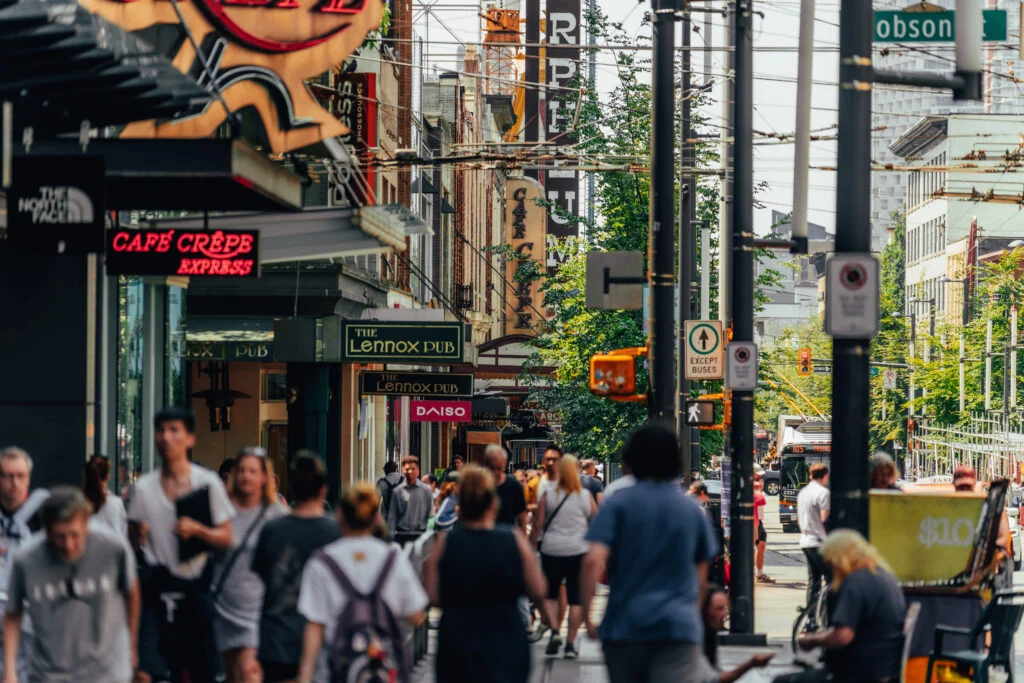
As we inch towards the end of summer, the heat was real as a number of heat advisories had impacted Metro Vancouver and the rest of the province. This heat has an adverse effect on many peoples’ daily lives, particularly as they walk and wheel to get where they want to go. This heat is referred to as the Urban Heat Island Effect which is when denser, urban areas are much warmer (sometimes up to 12 degrees warmer) than their surrounding, more rural environments.
Walking by its nature exposes you to all of the outdoor elements unlike driving a private vehicle or taking the bus. People walking, particularly older adults and more vulnerable populations, are much more susceptible to the negative effects of extreme heat. This raises an important question:
Is a more walkable city, a hotter one?
Credit: Downtown Van
The very infrastructure that promotes walking and accessibility such as sidewalks, non-permeable surfaces, and short distances between destinations can increase this urban heat island effect. Airflow between buildings can be restricted in addition to impervious surfaces trapping heat, as well as leaving little room for green infrastructure such as rain gardens and trees. Additionally, living in a walkable area encourages people to walk more, therefore increasing the time people spend outdoors and exposed to the heat island effect. For example, certain urban neighbourhoods in Montreal were found to have higher ambient temperatures compared to less urban neighbourhoods.
Credit: Christopher Cheung/The Tyee
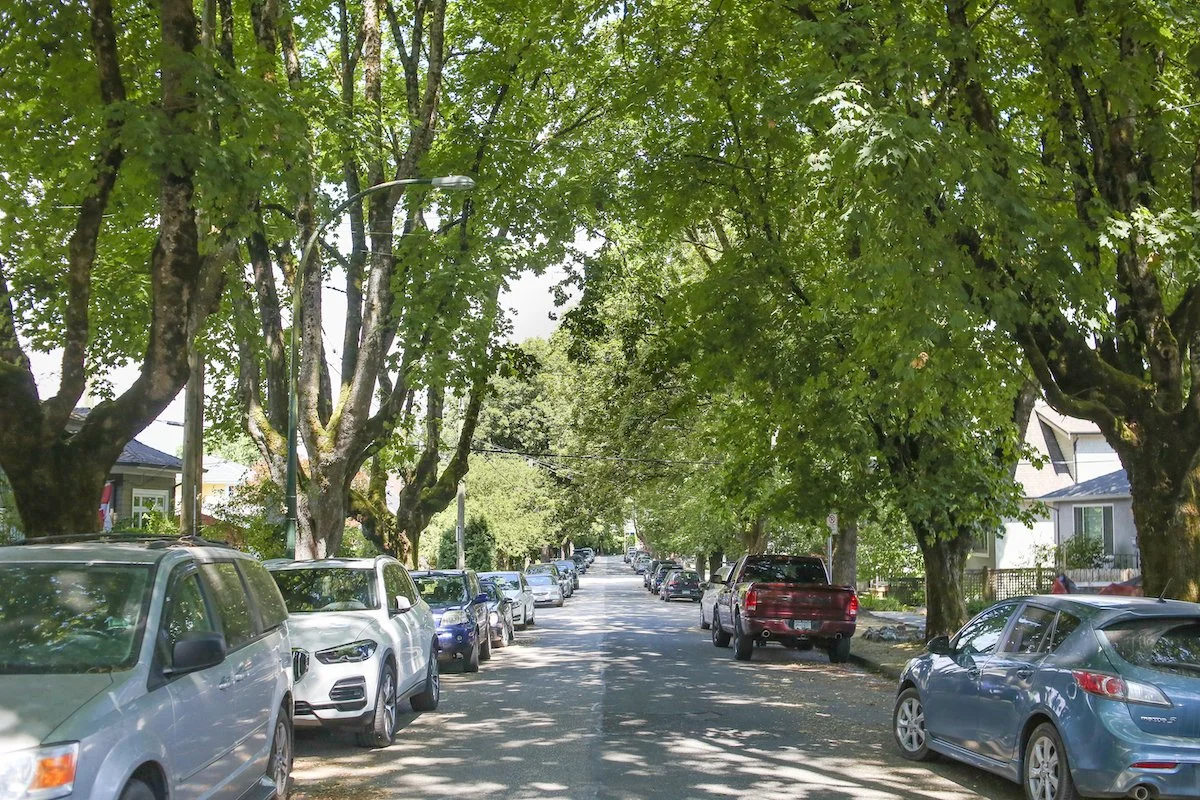
To deal with this heat and reduce temperatures, cities can implement many measures such as green infrastructure like planting trees. Having an urban tree canopy has shown to reduce heat related deaths by up to 33%. Rain gardens also replace impervious surfaces and are able to absorb heat and rain water, helping to reduce ambient temperature further. While these measures are highly effective, they can require a large amount of space, a water supply (which can become challenging during extended droughts), and most of all, time. These tree canopies must also be distributed equitably throughout the city.
Credit: FlatIron Nomad
Credit: Construction Canada
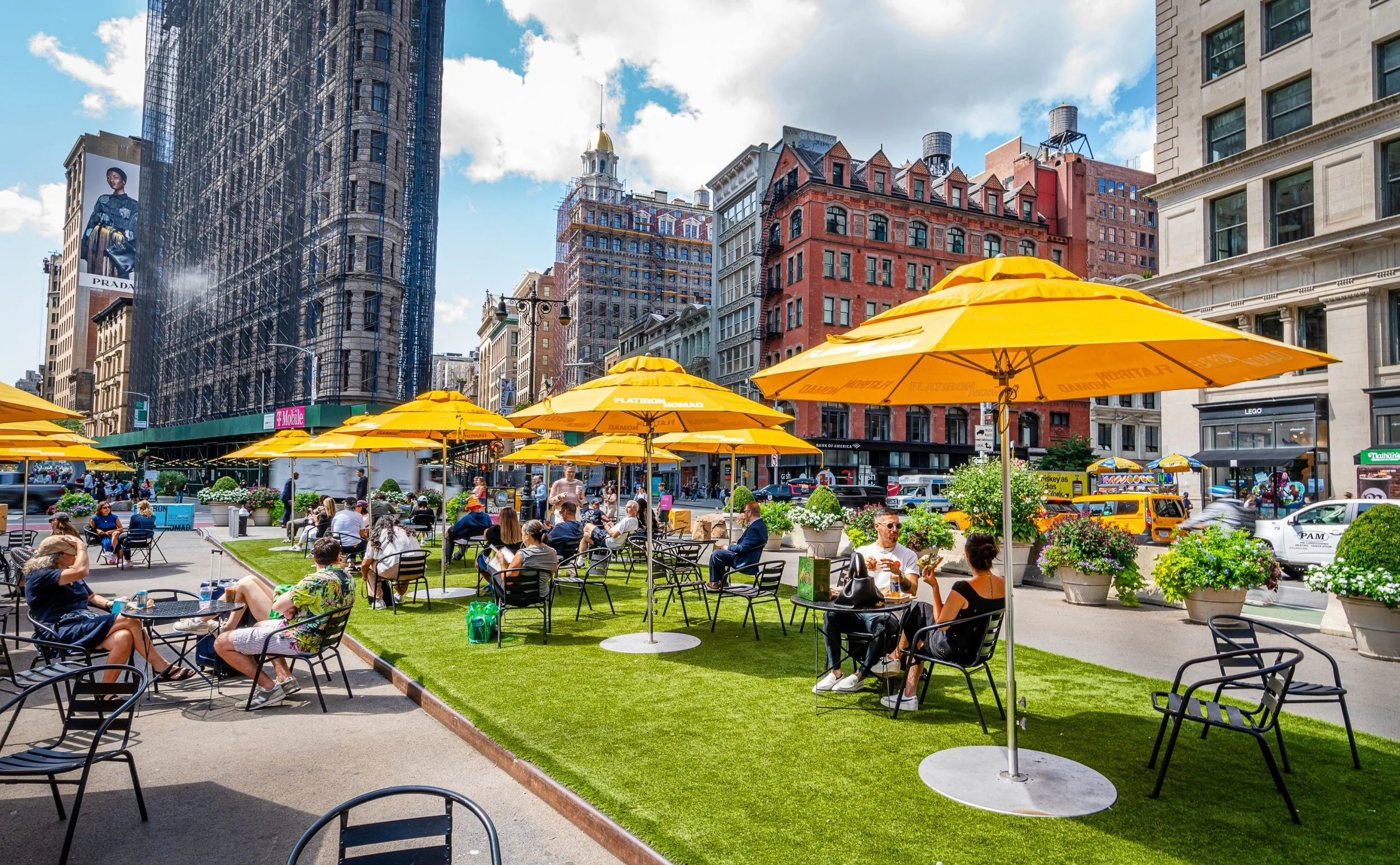
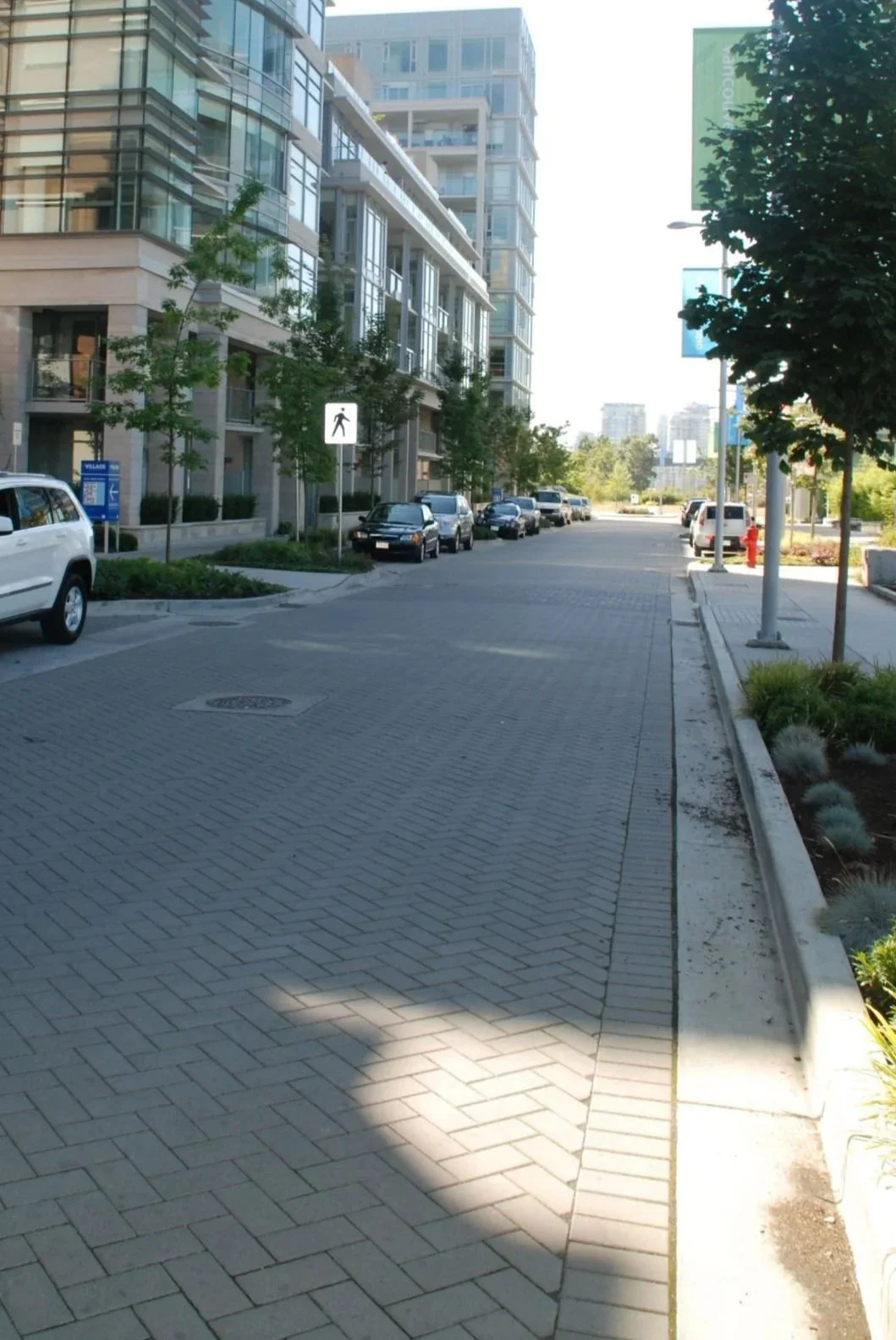
Therefore other measures can be taken in addition to implementing a tree canopy. For example, incorporating shaded structures such as umbrellas in public plazas, shaded bus stops, and canopies can help reduce surface temperatures and direct sun exposure. Further, alternative forms of pavement can also be used to reduce both the surface and ambient temperature of an area. These include permeable pavement that allow rain water to pass through pavement and soak the ground underneath. Reflective pavements that reflect solar activity can also cool surface temperatures however their implementation and effectiveness can depend on a number of factors and requires further research.
Finally, walking itself can also be part of the solution. The higher the number of people walking, the less private vehicle usage there is, therefore reducing emissions and heat generated from vehicles overall, reducing ambient temperatures and creating a more pleasant, people-focused environment for people to live, work, and play.
So to answer the question, a more walkable city doesn’t necessarily equal a hotter city, as it all comes down to the modes of transportation, land use, and urban design we prioritize.
Sources:
https://datasmart.hks.harvard.edu/addressing-extreme-heat-your-cities
https://www.epa.gov/green-infrastructure/reduce-heat-islands
https://www.shapeyourcity.ca/st-george-rainway/widgets/63615/faq