
The World Cup and Walkability: Opportunities to rethink how we want to move.
Written by: Reid Valaitis | Published: July 30, 2026
After an incredible month of football, the 2026 World Cup has officially wrapped up. While most of the world's attention was (rightfully) on the football and on-pitch action, major attention was also put towards how millions of visitors and residents travelled to and from these matches throughout the numerous host cities in Canada, Mexico, and the United States. With the 2026 World Cup being the largest in history, incredible demand was put on transportation systems and public spaces, providing an opportunity to reconsider how we want these spaces to function and be activated.
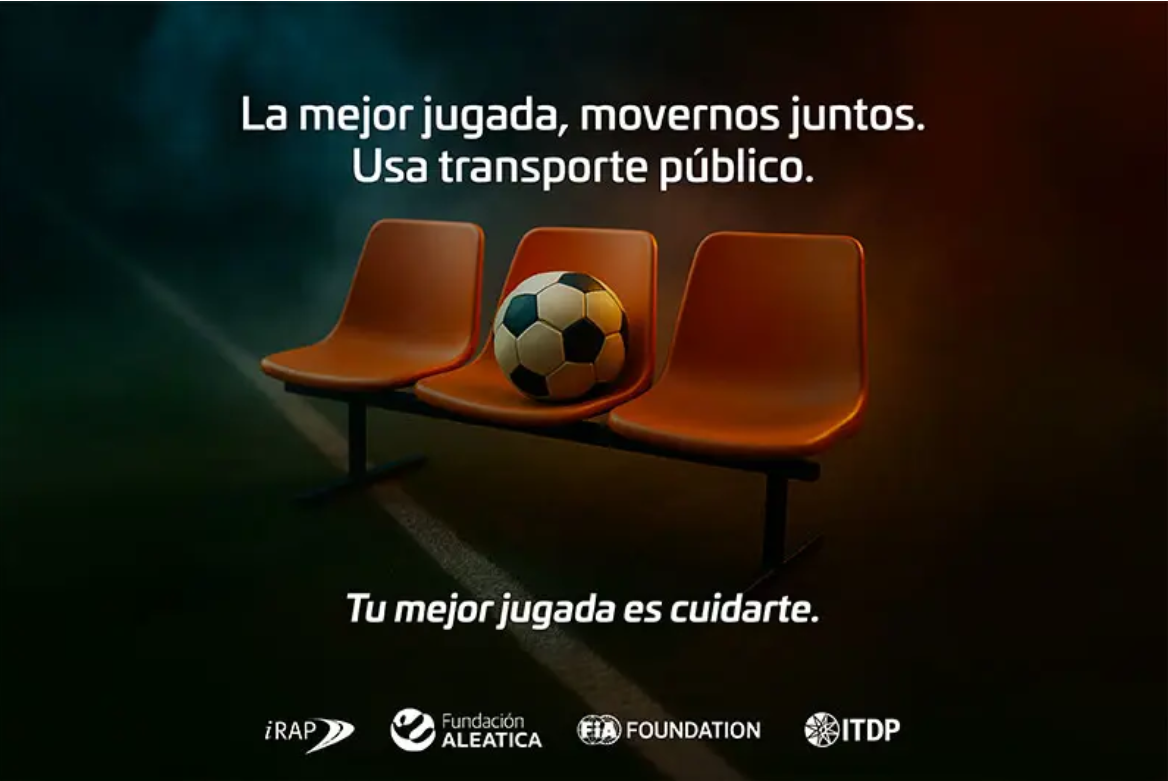
(Image via FIA Foundation)
With millions of fans attending games, many cities emphasized sustainable transportation to help folks travel and navigate throughout the city, not just on match days. Whether it was improving bus and train frequency, offering free and secure bike parking through a Bike Valet, or creating pedestrian-only streets, many cities de-emphasized personal vehicle use throughout the tournament. The backbone of attending any large event is walking or wheeling. No matter how people arrive at the location, fans will need to walk or wheel at some point in their journey, and it's imperative it is safe, accessible, and convenient to do so.
For example, Mexico partnered with FIA Foundation and the Institute for Transportation Policy Development, to launch their “Tu Mejor Jugada es Cuidarte” communication campaign (“‘Your Best Move Is to Take Care of Yourself’). This communications campaign encouraged attendees to travel on dedicated pedestrian routes and public transportation while discouraging high driving speeds with the ultimate goal of creating a safer mobility system following the tournament's conclusion.
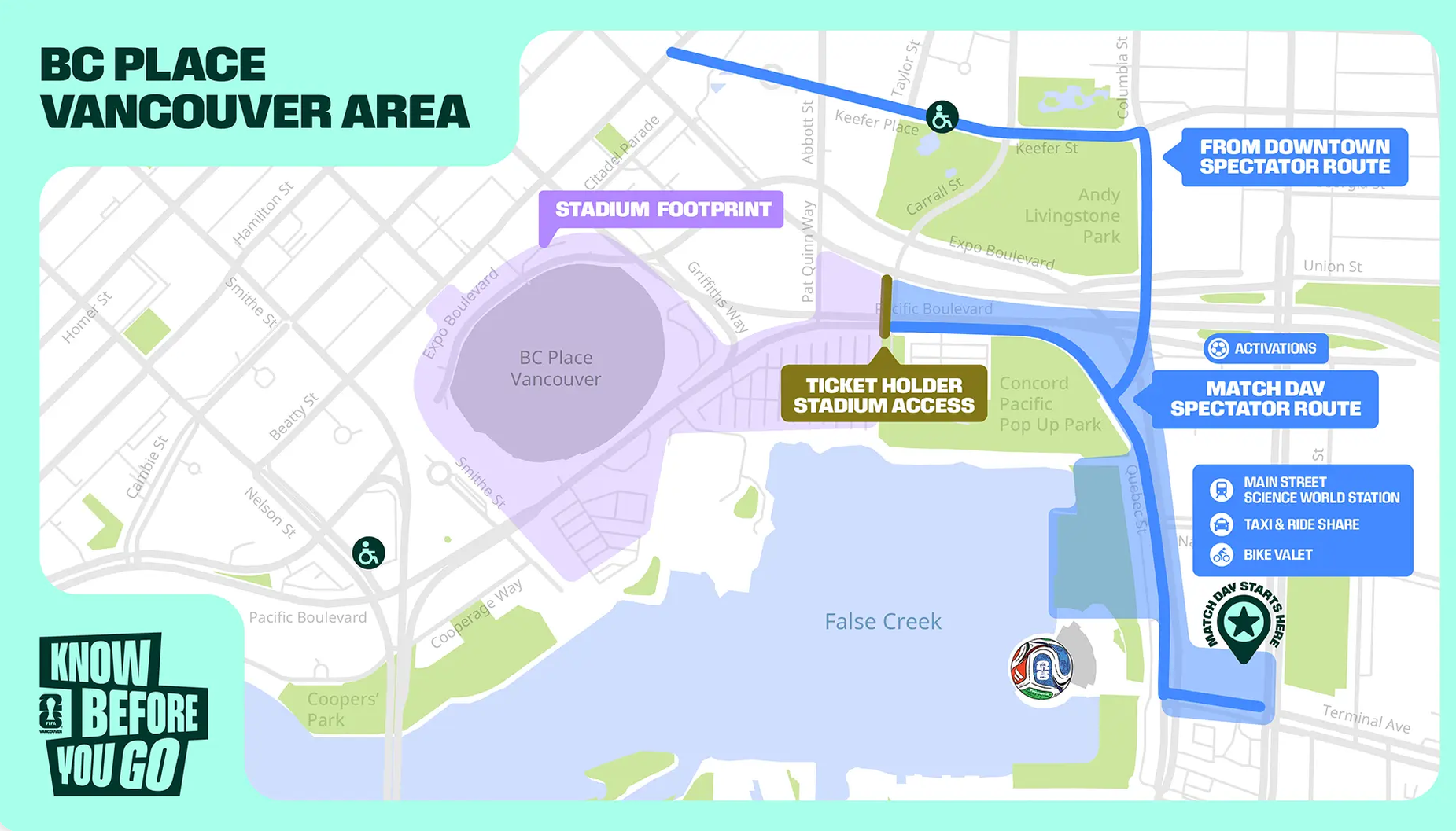
(Image via FWC26Vancouver)
In Vancouver, stretches of Pacific Boulevard and Quebec Street were closed to vehicle traffic on match days as part of the “Last Mile Route” to accommodate the massive game-day parades and match spectators. What were once wide arterials for vehicle traffic became a corridor prioritized for people walking and wheeling. This change highlighted the large amount of space occupied by vehicles in our public right-of-ways while also emphasizing how efficient it is to move a large group of people on foot or by mobility device using the same amount of space.
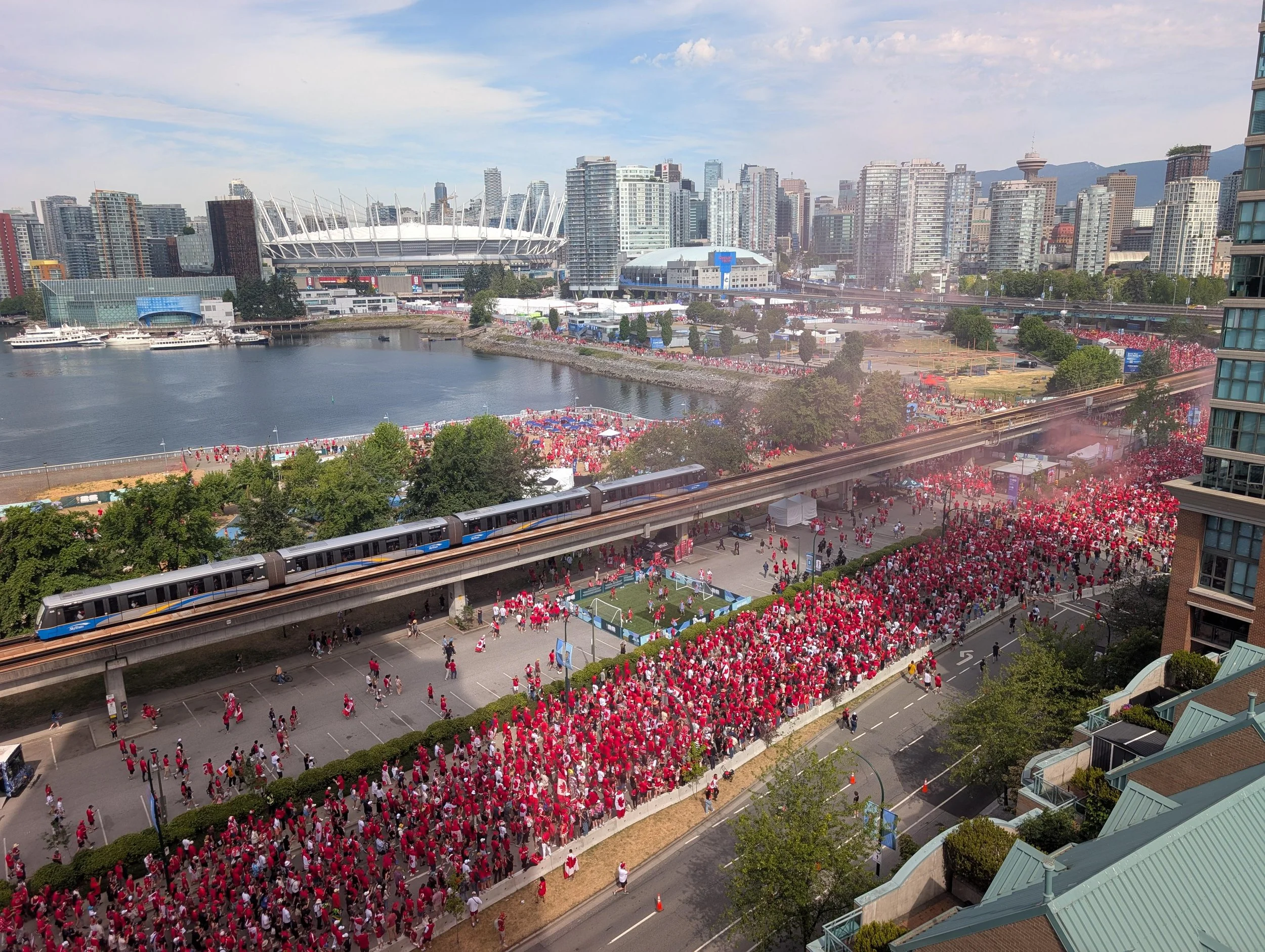
(Image via Reddit User jjumbuck)
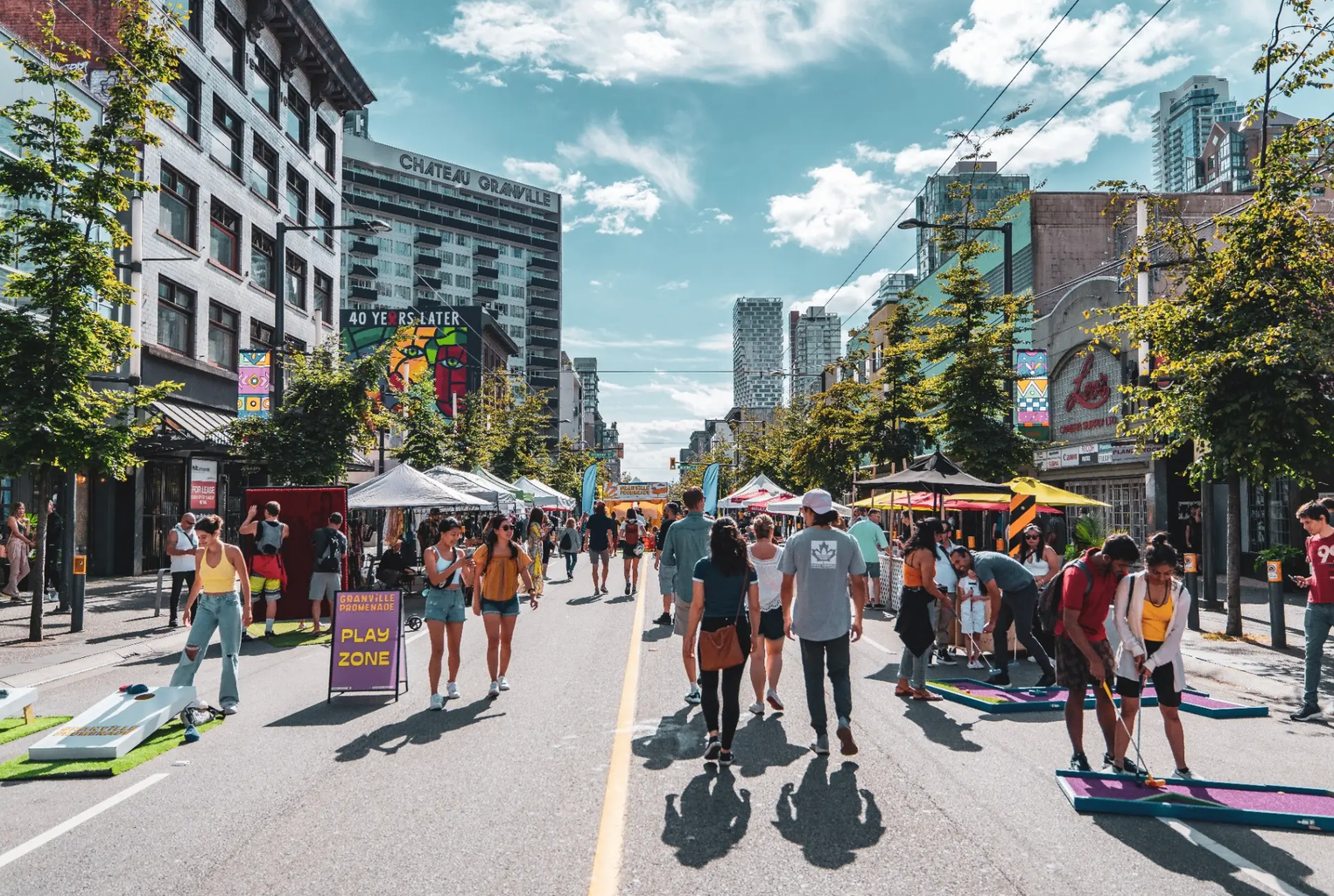
Further, major attention was placed towards Granville Street. The long-time high street was closed to vehicles and pedestrianized between West Georgia and Davie Street to create a more vibrant, activated, and safer public space for folks to gather throughout the tournament while experiencing the many watch parties, businesses, restaurants, and shops along the street. While this activation was intended as a temporary measure for the World Cup, it has since been extended into September given the positive feedback from residents, visitors, and local businesses. This implementation aligns with the city’s Granville Street Plan, approved in 2025, which envisions the street eventually becoming a year-round pedestrian corridor. Rather than waiting for the plan’s 5-10 year timeline for a seasonal pedestrian zone, the city has the opportunity to experience this implementation now. Without the demands and timeline of such a massive event, this pedestrianization would likely have taken much longer to implement.
(Image via Destination Vancouver)
The importance of walkability for these massive events is reflected in hospitality metrics from Skif. According to their hospitality report, 64% of folks travelling for a major event prioritize accommodations within walking distance to the venue to avoid potential challenges taking busier than normal public transit or high-volume crowds. This is incredibly important for people of all ages and abilities, including multi generational families, as according to Sports Events & Tourism Association (Sports ETA), groups attending large events are more commonly preferring modes of transportation that do not rely on private-vehicles, parking costs, and traffic congestion.
These huge events place a magnifying glass on how people move. They highlight existing mobility and public space challenges while offering opportunities to address these challenges through temporary pilot projects that can become extended or more permanent beyond the tournament's completion, such as the Granville Street Pedestrian Zone. Without the urgency and demands of a large-scale sporting event, these projects may take much longer to pilot, and even longer to fully implement. They give us a chance to rethink how we want people to move throughout our cities, how we want to activate public spaces, and experience first-hand how important prioritizing the movement of people first and foremost is to a healthy, accessible, and sustainable city.
Sources
Institute for Transportation and Development Policy. “The 2026 World Cup Is a Chance to Spotlight Safer Streets and Better Transport.” Institute for Transportation and Development Policy, 16 June 2026, https://itdp.org/2026/06/16/2026-world-cup-spotlight-safer-streets-and-better-transport/.
“Data Indicates Rising Demand for Walkable Infrastructure and Multi-Day Itineraries in Sports Tourism.” The Columbus Dispatch, https://www.dispatch.com/press-release/story/196245/data-indicates-rising-demand-for-walkable-infrastructure-and-multi-day-itineraries-in-sports-tourism/.
FIA Foundation. “Partners in Mexico Raise Commitment for Road Safety During Preparations to Host Millions of Visitors Ahead of the World Cup.” FIA Foundation, 27 Apr. 2026, https://www.fiafoundation.org/news/partners-in-mexico-raise-commitment-for-road-safety-during-preparations-to-host-millions-of-visitors-ahead-of-the-world-cup.
Chan, Kenneth. “Granville Street Pedestrian Zone Could Become Lasting Legacy of FIFA World Cup 26.” Daily Hive Vancouver, https://dailyhive.com/vancouver/granville-street-pedestrian-zone-fifa-world-cup-vancouver-legacy-future.
Bains, Camille. “These Routes Were Made for Walking: Organizers Promote Pedestrian Access to World Cup Games.” Vancouver Sun, https://vancouversun.com/news/these-routes-were-made-for-walking-organizers-promote-pedestrian-access-to-world-cup-games.
“Vancouver Transforms into a Walkable City for FIFA World Cup 2026 with New Pedestrian Zones, Expanded Public Spaces, and Sustainable Tourism Infrastructure.” Travel and Tour World, https://www.travelandtourworld.com/news/article/98p6hch17o04/.
City of Vancouver. Granville Street Planning and Policy Framework. City of Vancouver, https://guidelines.vancouver.ca/policy-plan-granville.pdf.