
35 Ideas to Support Walking
Ideas For BC Municipalities
People in BC love walking. In celebration of our 35th anniversary, and ahead of the BC municipal elections, we are sharing 35 ideas that municipalities can implement to support walking and rolling (including the use of wheelchairs and mobility devices) in their communities.
Most British Columbians want to walk more, but our communities aren't always built for it. There is massive support across BC for walkable neighbourhoods where people can access many of their daily needs in a short walk, and feel safe and protected from car traffic.
Investing in walking infrastructure will make our communities across BC healthier, stronger and more resilient to climate impacts and economic instability. It's also a win for local businesses, since commercial streets that attract the most people walking are often the most vibrant and successful.
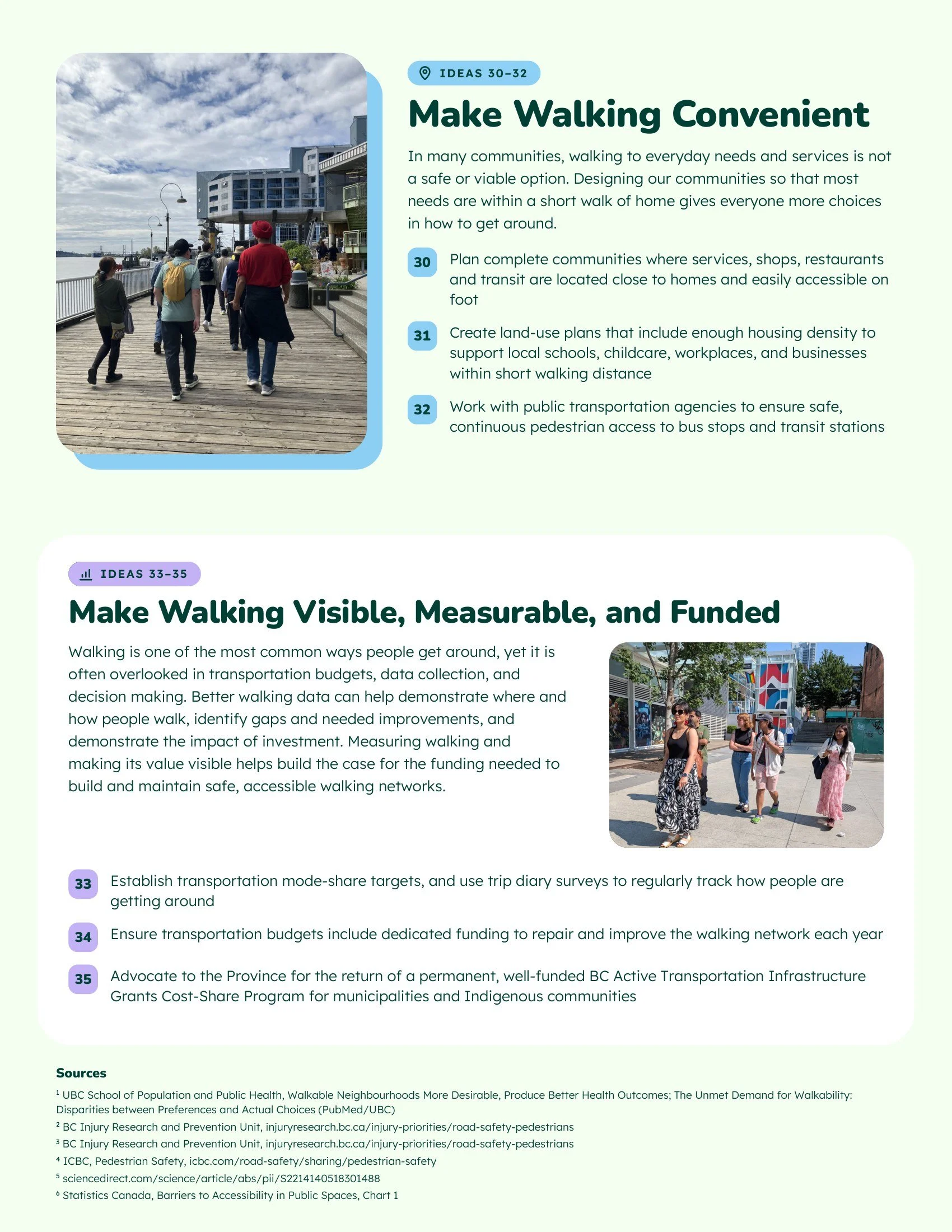
Make Walking Safer
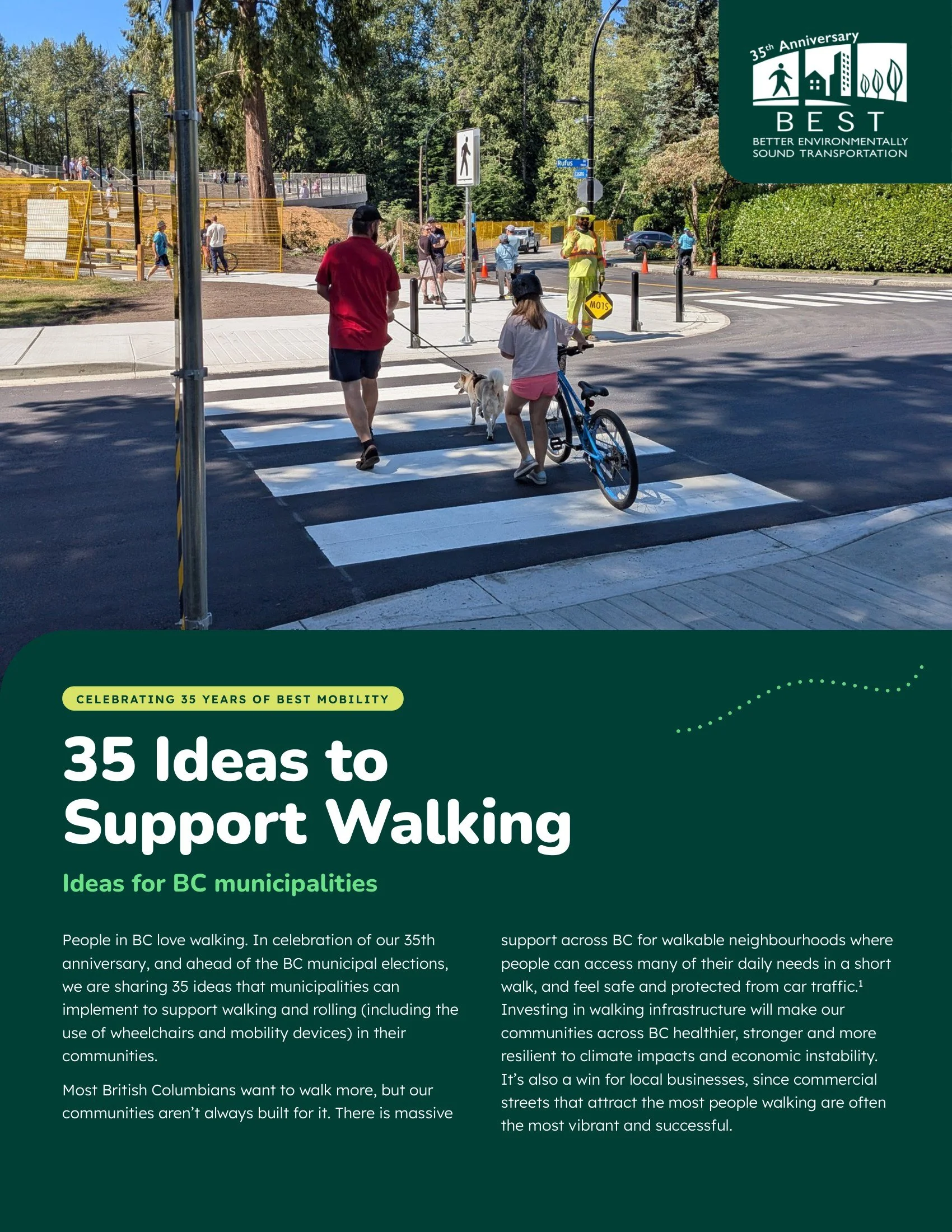
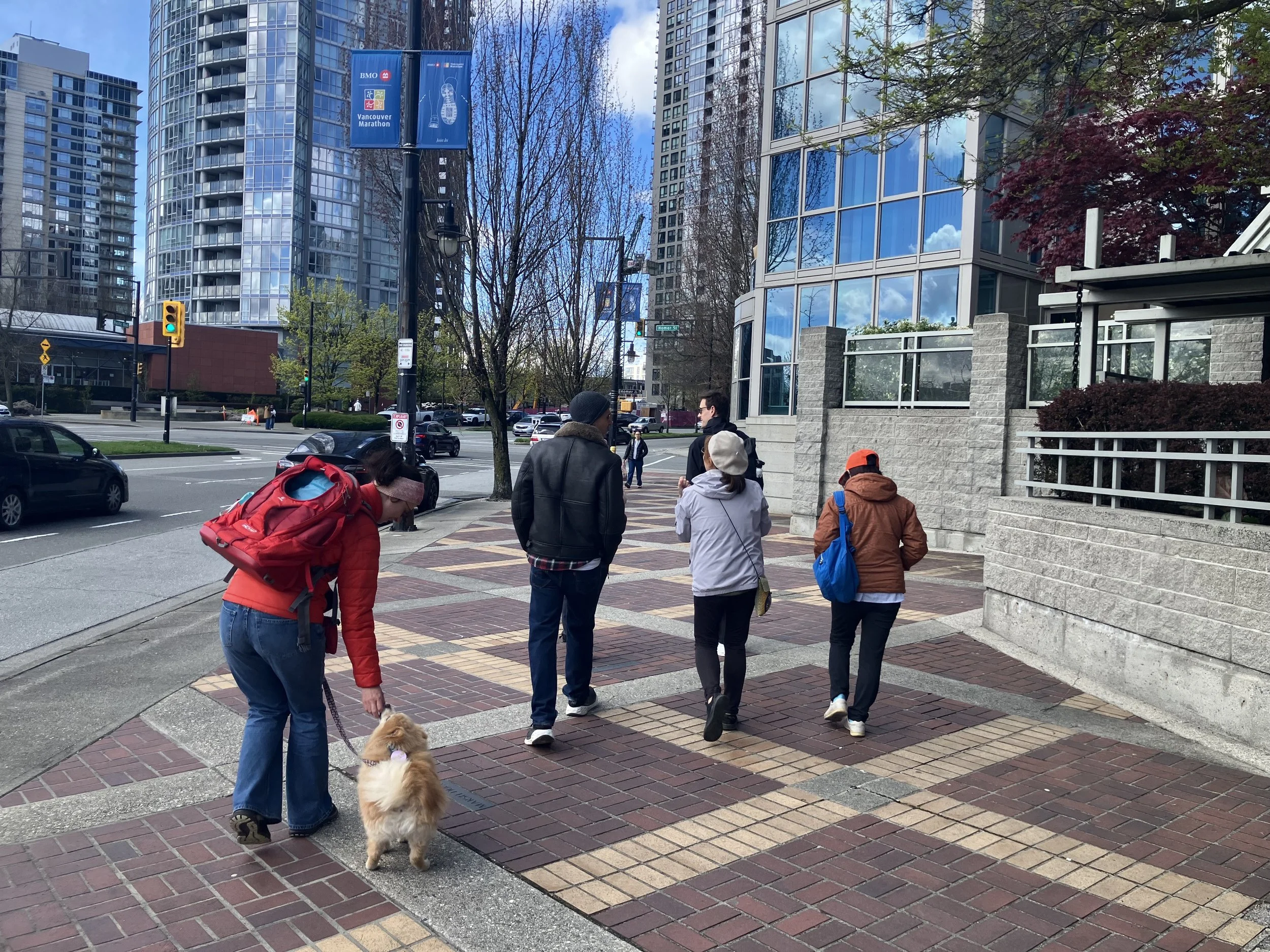
Over 3,000 people walking are hit by drivers every year in BC. Speeding, poor infrastructure design, driver distraction, and failing to yield the right-of-way are common contributing factors. Also, approximately 79% of crashes involving people walking in BC occur at intersections. By implementing the ideas below, municipalities can make walking safer in their communities.
- Create and implement municipal road safety strategies based on the Vision Zero approach to eliminate traffic deaths and serious injuries
- Identify and prioritize improvements at high-crash intersections
- Reduce speed limits to 30 km/h along as many streets as possible, including popular commercial streets, near dense residential areas, and on residential streets without a centre line
- Provide adequate, welcoming lighting in pedestrian spaces
- Launch a neighbourhood traffic calming program (see the City of Vancouver for inspiration)
- Expand your safe cycling and rolling network (fun fact: bike lanes make streets safer for all users, including those walking and driving)
- Improve intersections by reducing crossing lengths and adding pedestrian islands
- Rapidly expand Leading Pedestrian Intervals (LPIs), retiming signals to give people walking and cycling a “head start” of 3–7 seconds before motor vehicles (fun fact: this is really cheap to do!)
- Launch a Raised Crosswalk Program, quickly building them where needed
- Install ‘No Right Turn on Red’ signage at any intersections within 500 metres of a school or community centre, and at locations with right turn safety issues (fun fact: “no right turn on red” is the default city-wide in many jurisdictions in the world, including Montreal, and was the law in BC prior to the 1970s)
- Rapidly “daylight” as many crosswalks as possible, installing “no parking” signage to prevent people parking too close to crosswalks and impeding visibility of people waiting to cross
- Advocate to the Province for more automated enforcement and intersection safety cameras in your community
Make Walking Fun
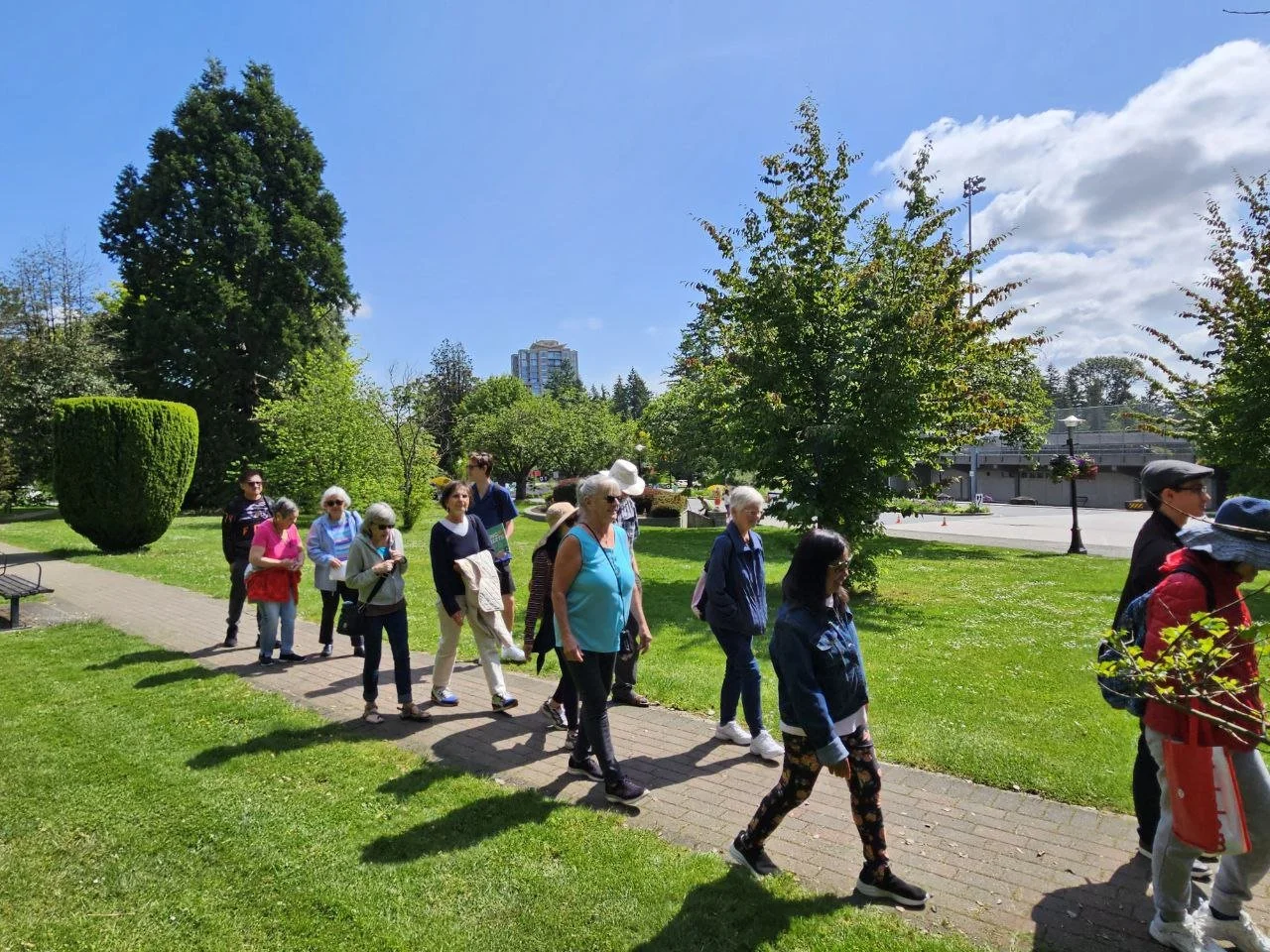
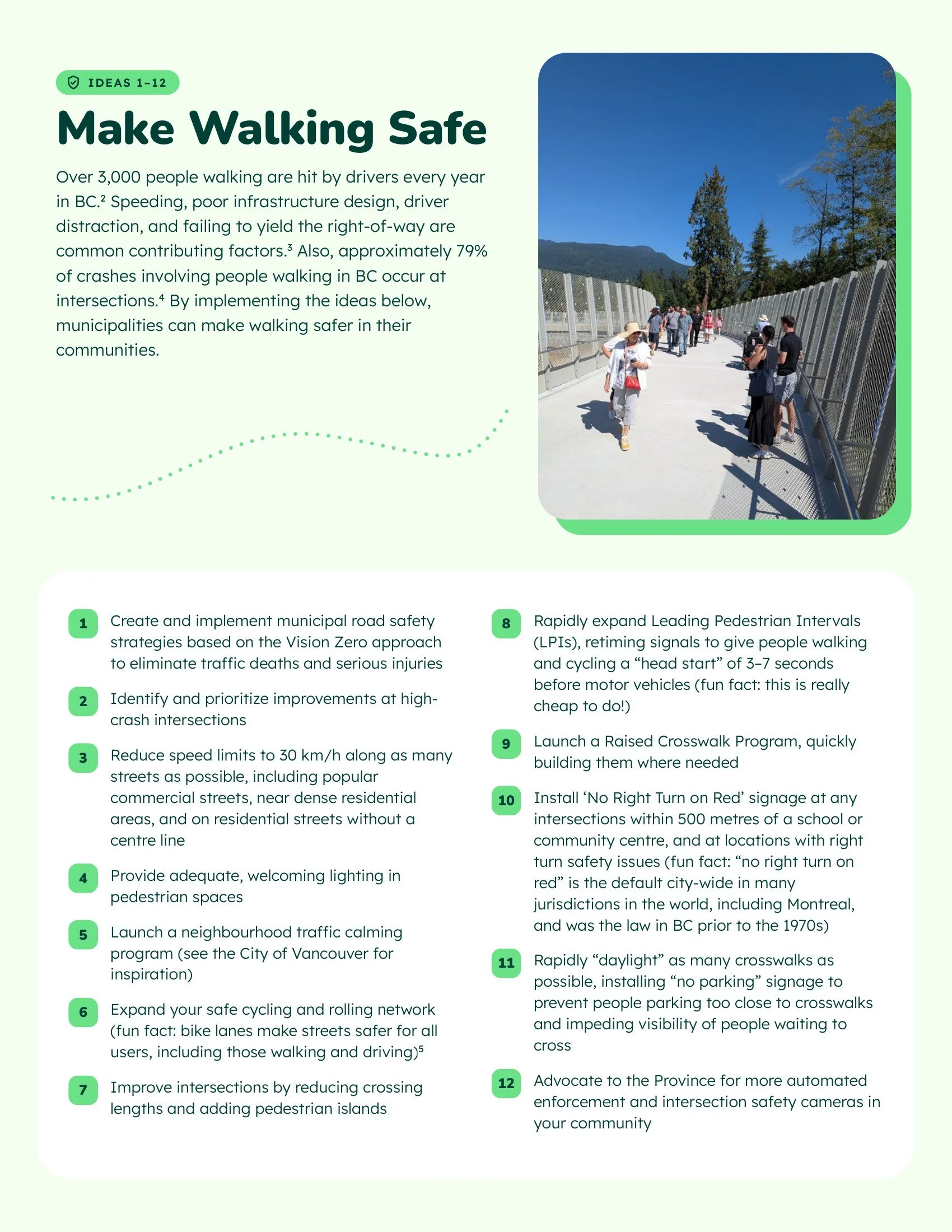
Walking is more than a way to get from A to B; it's also a chance to connect with neighbours, discover local shops, and enjoy the places we live. Lively streets with places to sit, play and gather invite people to slow down and linger. When streets are designed with people in mind, walking becomes something we look forward to.
- Launch a summer streets program to pedestrianize major destination streets with public seating, activations and patios
- Develop plans for a permanent pedestrianized street network
- Implement permanent car-free streets and public plazas
- Launch a School Streets Program that includes car-free blocks beside schools, along with fun activities
- Launch a Halloween Streets Program, allowing communities to easily make safe, car-free block parties on Halloween night
- Launch a Walking School Bus Program for elementary schools
- Build fun street furniture and small playgrounds in town centres
- Make it easier for community members and groups to hold temporary street events, streamlining and simplifying the permitting process
- Participate in BEST Mobility’s annual Walk30 Challenge
Make Walking Accessible
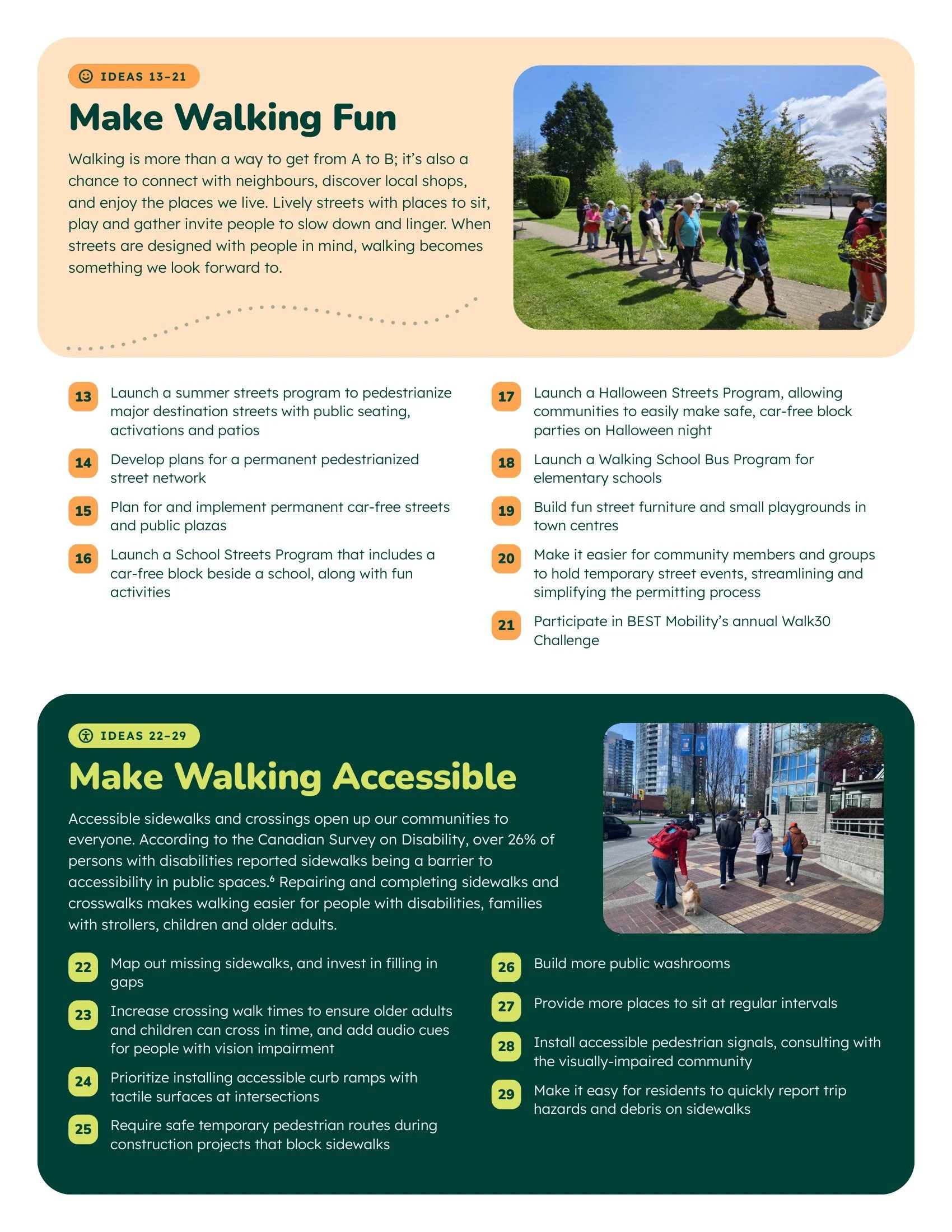
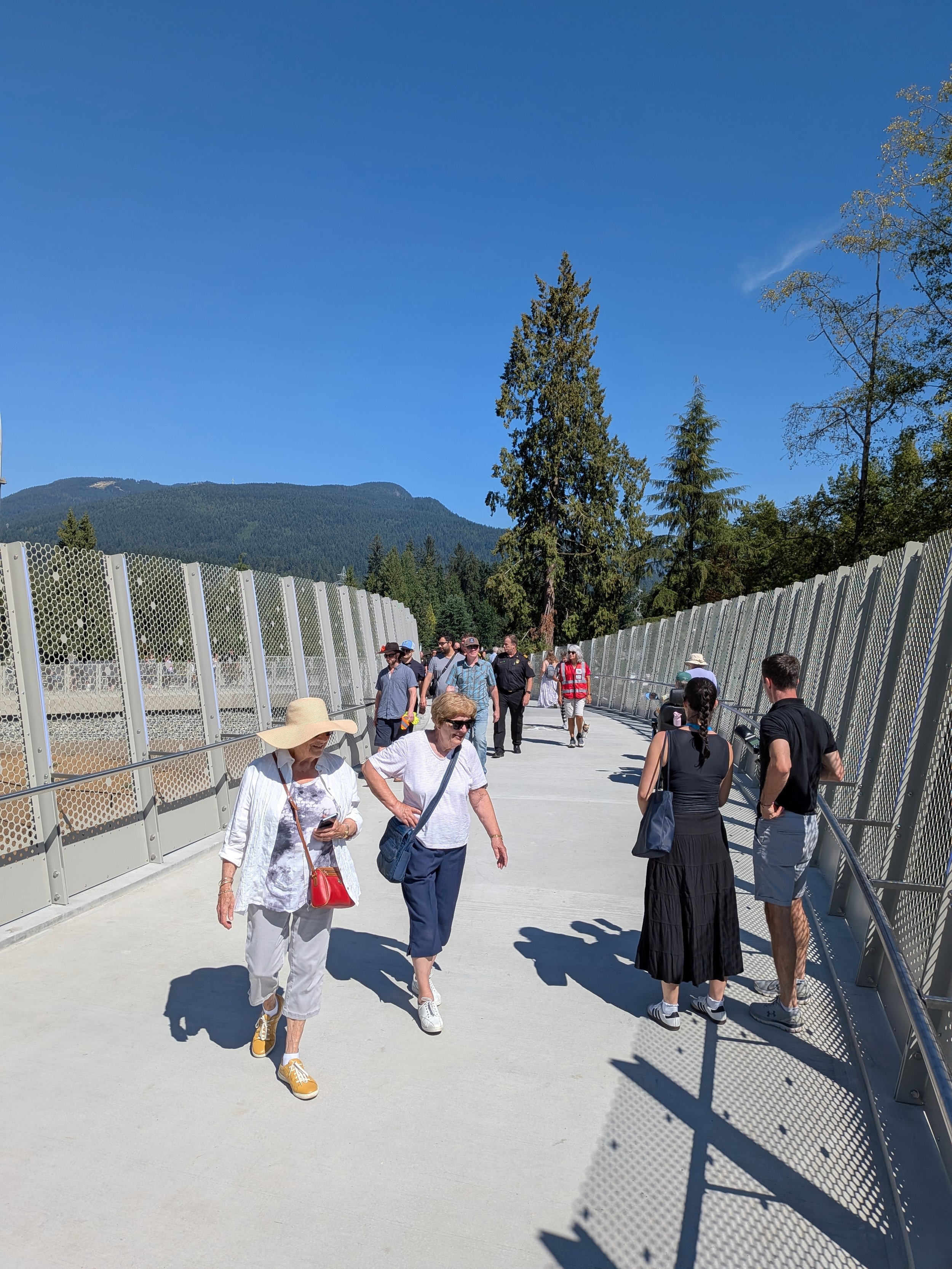
Accessible sidewalks and crossings open up our communities to everyone. According to the Canadian Survey on Disability, over 26% of persons with disabilities reported sidewalks being a barrier to accessibility in public spaces. Repairing and completing sidewalks and crosswalks makes walking easier for people with disabilities, families with strollers, children and older adults.
- Map out missing sidewalks, and invest in filling in gaps
- Increase crossing walk times to ensure older adults and children can cross in time, and add audio cues for people with vision impairment
- Prioritize installing accessible curb ramps with tactile surfaces at intersections
- Require safe temporary pedestrian routes during construction projects that block sidewalks
- Build more public washrooms
- Provide more places to sit at regular intervals
- Install accessible pedestrian signals, consulting with the visually-impaired community
- Make it easy for residents to quickly report trip hazards and debris on sidewalks
Make Walking Convenient
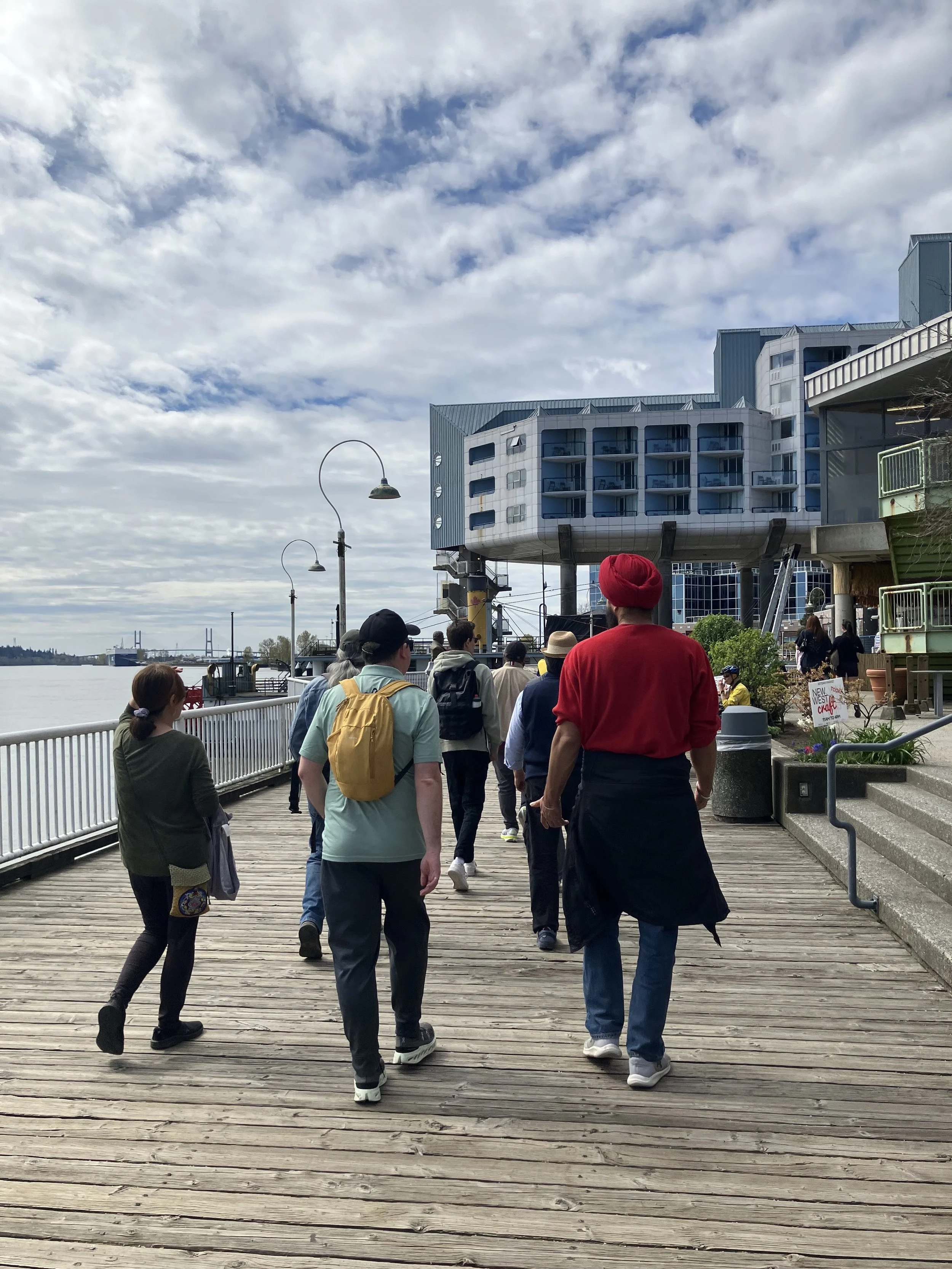
In many communities, walking to everyday needs and services is not a safe or viable option. Designing our communities so that most needs are within a short walk of home gives everyone more choices in how to get around.
- Plan complete communities where services, shops, restaurants and transit are located close to homes and easily accessible on foot
- Create land-use plans that include enough housing density to support local schools, childcare, workplaces, and businesses within short walking distance
- Work with public transportation agencies to ensure safe, continuous pedestrian access to bus stops and transit stations
Make Walking Visible, Measurable, and Funded
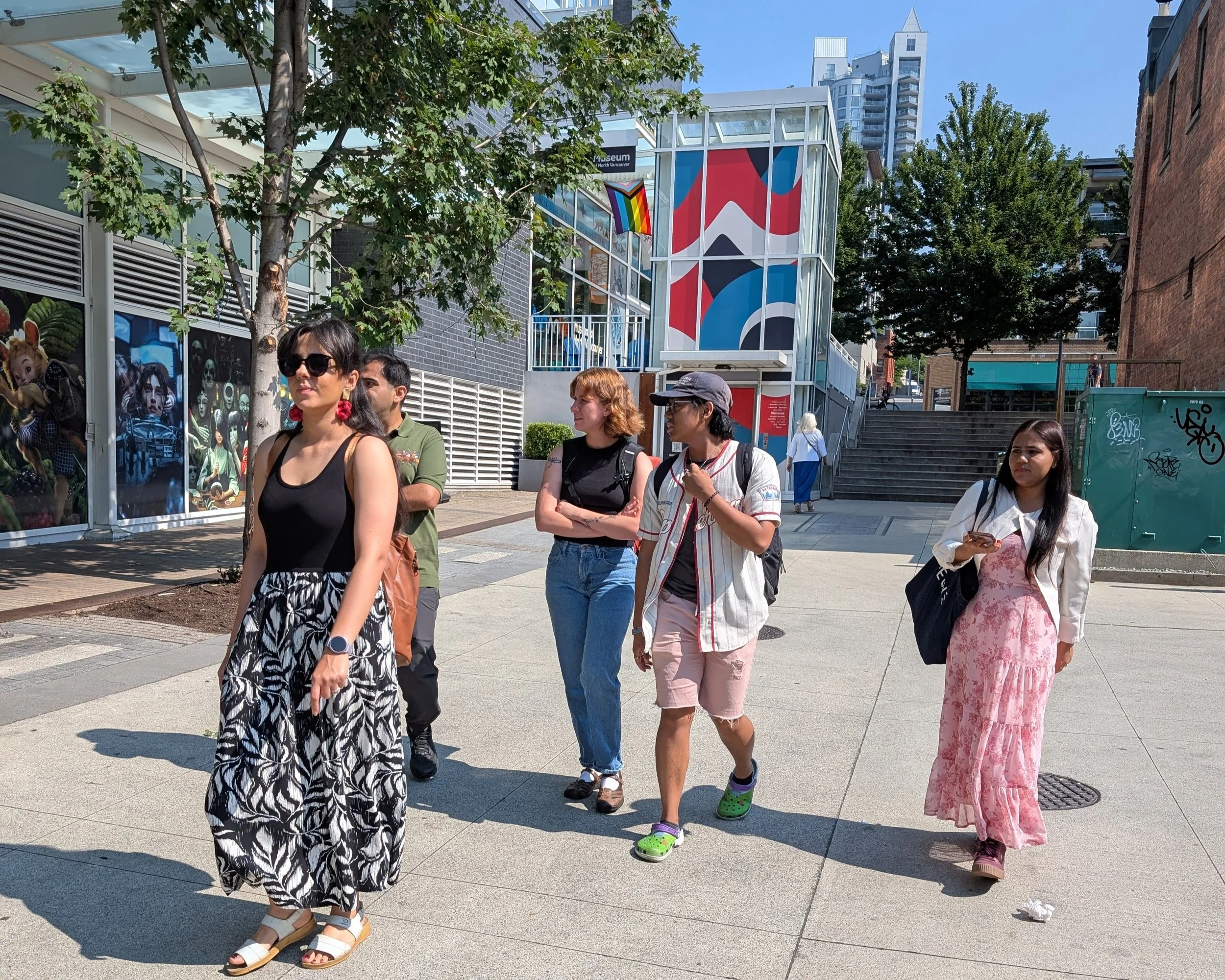
Walking is one of the most common ways people get around, yet it is often overlooked in transportation budgets, data collection, and decision making. Better walking data can help demonstrate where and how people walk, identify gaps and needed improvements, and demonstrate the impact of investment. Measuring walking and making its value visible helps build the case for the funding needed to build and maintain safe, accessible walking networks.
- Establish transportation mode-share targets, and use trip diary surveys to regularly track how people are getting around
- Ensure transportation budgets include dedicated funding to repair and improve the walking network each year
- Advocate to the Province for the return of a permanent, well-funded BC Active Transportation Infrastructure Grants Cost-Share Program for municipalities and Indigenous communities
Have an idea to improve walking or want to showcase a project in your community? Reach out to johanna.lauyanto@best.bc.ca.
Sources
UBC School of Population and Public Health, Walkable Neighbourhoods More Desirable, Produce Better Health Outcomes; The Unmet Demand for Walkability: Disparities between Preferences and Actual Choices (PubMed/UBC)
BC Injury Research and Prevention Unit, Road Safety: Pedestrians
ICBC, Pedestrian Safety
Statistics Canada, Barriers to Accessibility in Public Spaces, Chart 1